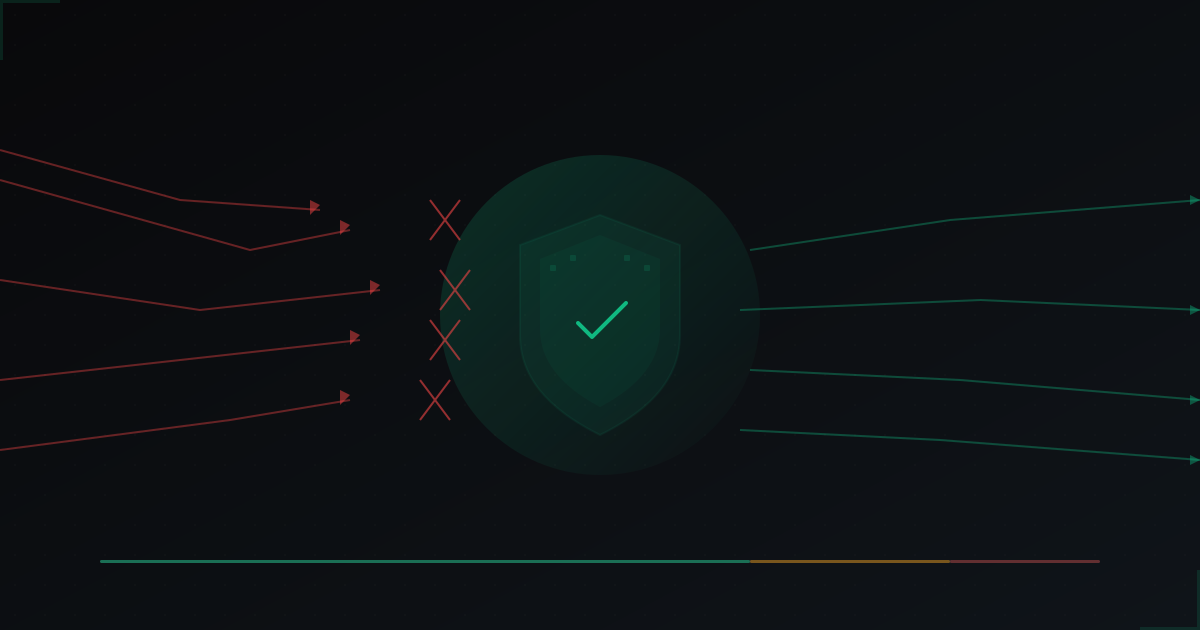
DDoS Attack Trends for Minecraft Servers in 2026
The DDoS landscape for Minecraft servers changed dramatically in 2025-2026. Attacks got stronger, smarter, and cheaper. Let's break down what happened and what to expect.
Traffic volumes keep climbing
Back in 2024, a 50 Gbps attack on a Minecraft server was considered serious. Now it's background noise. Average attack volume increased 40-60% compared to last year. Here's why:
- Cheap botnets - renting a botnet got cheaper. Anyone with $20 can order an attack on a server they don't like.
- IoT devices - routers, cameras, smart bulbs - they keep getting recruited into botnets. Vulnerable devices multiply faster than they get patched.
- Stresser services - "stress testing" platforms remain available and actively advertised in Discord channels.
New attack vectors
SYN floods with spoofed addresses
The classic never gets old. SYN flood remains one of the most popular methods. But in 2025-2026, attackers started using more advanced IP spoofing techniques, making network-level filtering harder.
UDP amplification
Memcached, DNS, NTP, CLDAP - attackers keep exploiting open services for traffic amplification. Amplification factor can reach 50-70x. Send 1 Gbps, deliver 50 to the target. Simple and brutal economics.
Application-layer attacks
This is where it gets interesting. The Minecraft protocol opens up a world of attack possibilities:
- Fake player joins - bots mimic real players. They complete the handshake, send a login packet, and load the server with auth processing. Thousands of these per second and the server chokes.
- Ping floods - mass Server List Ping requests. Each request forces the server to build a response with MOTD, player count, and favicon. At sufficient volume, this alone can take a server down.
- Login process attacks - bots send login requests, forcing the server to generate encryption keys and call the Mojang API. That's a CPU-heavy operation.
- Slowloris for Minecraft - slow connections that occupy slots and prevent real players from joining.
Botnets got smarter
The top trend of 2025-2026 is intelligent bots. A fake player used to be dumb: connect, send garbage, disconnect. Today's bots:
- Mimic real behavior - they move, send chat messages, react to events
- Use valid accounts - stolen or generated through Microsoft auth
- Distribute load - attacks come through thousands of residential proxies across different countries, not a single IP pool
- Adapt - if one method fails, they switch to another
Good news - defense systems aren't standing still either. Modern anti-DDoS solutions use behavioral analysis, machine learning, and multi-layer filtering. The arms race continues.
Typical attack targets
Who suffers most:
- Large public servers - popular projects with 500+ online. Attacked by competitors, angry players, or just for clout.
- Servers during events - season launches, key giveaways, top-wipes. Attackers know the schedule better than the admins themselves.
- Unprotected servers - running on a regular VPS with no filtering whatsoever. Easy target.
- Server networks - BungeeCord/Velocity proxies. One hit on the proxy and every server in the network goes down.
What changed in defense
Multi-layer filtering
A single firewall is no longer enough. Effective protection works on multiple levels:
- Network layer (L3/L4) - filtering SYN floods, UDP amplification, spoofing
- Transport layer - TCP session analysis, anomalous pattern detection
- Application layer (L7) - deep Minecraft protocol analysis, connection behavior verification
Geo-filtering
If 90% of your players are from one region - why accept connections from the other side of the world? Geo-filtering cuts off botnets from atypical regions.
CAPTCHA and verification
Interactive checks on connection help filter out bots. The key is making the check invisible to real players while creating a barrier for automation.
How to protect your server
Concrete steps:
- Don't expose your real server IP. Use proxy-based protection. If the IP leaks - change it.
- Use specialized protection. Regular hosting won't survive a serious attack. You need a provider that understands Minecraft traffic.
- Set up rate limits. Connections per IP, packets per second - all of this must be configured.
- Monitor your traffic. Abnormal spikes in connections or bandwidth are the first sign of an attack. The sooner you notice, the faster you react.
- Keep your software updated. Vulnerabilities in plugins and server cores are entry points for attacks.
- Make backups. An attack might be a distraction while someone breaks into your control panel.
Forecast for late 2026
Attacks will keep growing. Botnets will get smarter, and attack costs will keep dropping. But defense isn't standing still. We expect:
- Growth in application-layer (L7) attacks - they're harder to filter and more effective
- More attacks through residential proxies - harder to distinguish from real users
- Rise of hybrid attacks - simultaneous strikes across multiple vectors
- Better defense systems - more automation, faster response times
The bottom line is simple: every server needs protection. It's not "if an attack happens" but "when it happens." Better to be prepared.
Protect Your Server from DDoS Attacks
Free protection with 5-minute setup. 1 TB bandwidth included.
Try for FreeRelated Articles
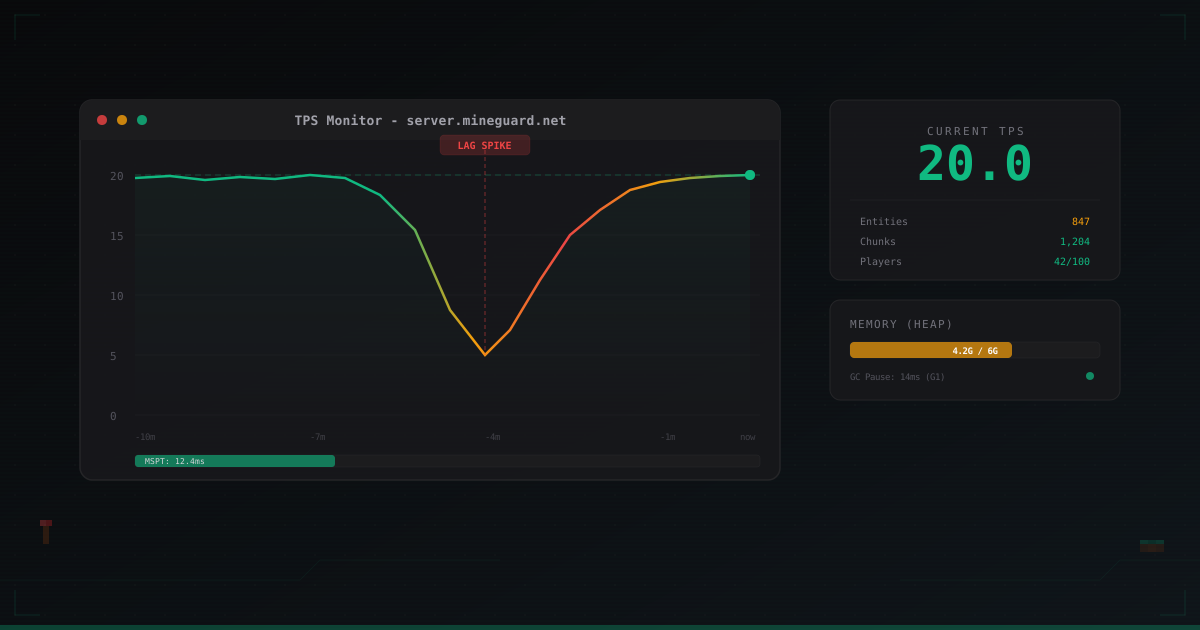
Minecraft Server Lag: Causes and How to Fix Them
Diagnosing Minecraft server lag: TPS, spark profiler, chunk loading, entity optimization, redstone, JVM tuning with Aikar flags, Paper config. Practical examples and real configs.
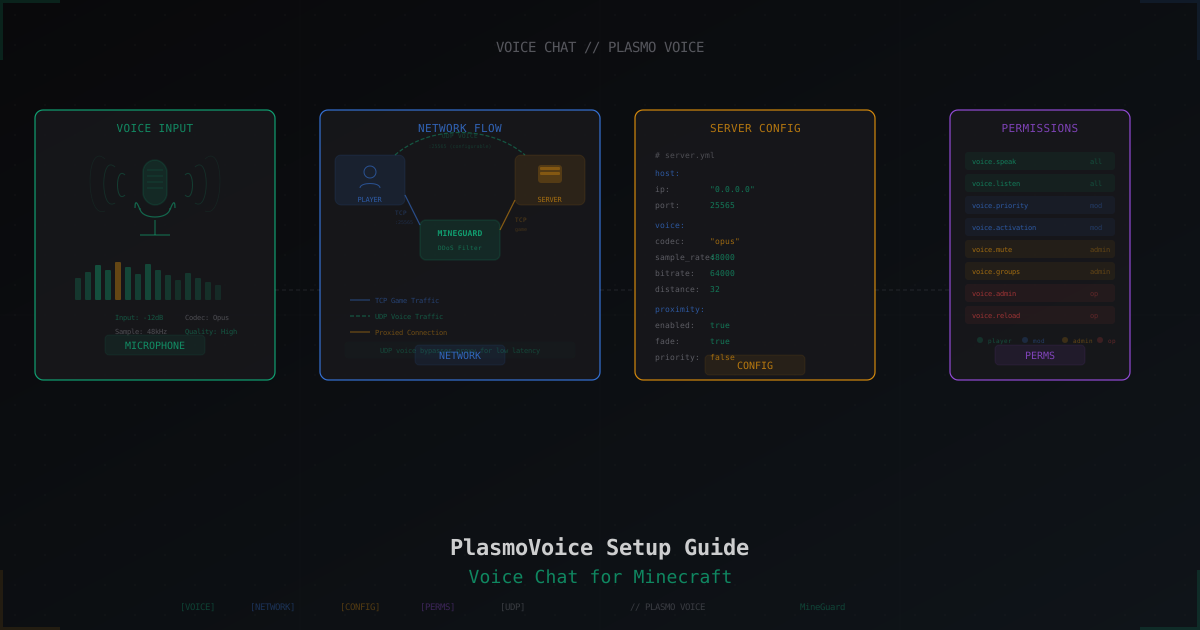
How to Set Up PlasmoVoice on a Minecraft Server
Complete PlasmoVoice setup guide: installation on Paper, Fabric, Forge, UDP port configuration, permissions, activation modes, proximity chat, encryption, and troubleshooting common issues.
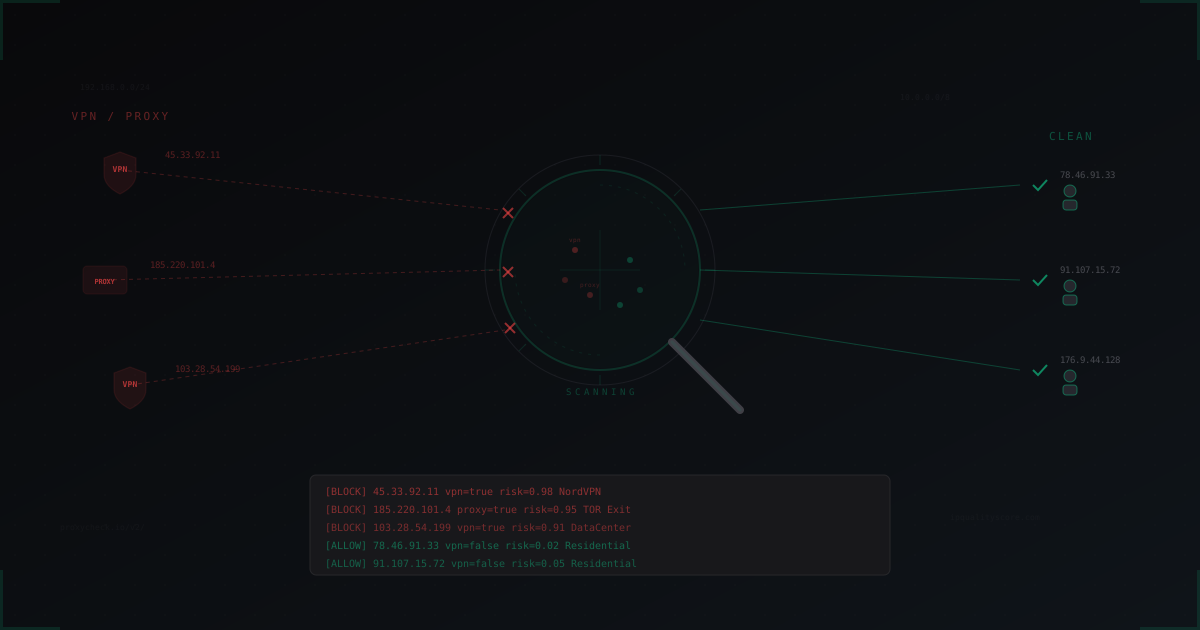
VPN and Proxy Detection on Minecraft Servers: Why and How
A complete guide to detecting VPN and proxy connections on Minecraft servers. Detection methods, API services, plugins, false positives, and balancing security with accessibility.