Why Free DDoS Protection Isn't Enough for Growing Servers
Free protection: a great start, but not the finish line
When you first launch a Minecraft server, free DDoS protection feels like the perfect deal. Zero cost, basic filtering, server runs fine. For a small server with friends or your first public project with 20-50 players, it really is enough.
But servers grow. Your audience expands, a community forms, people come back every day. And that is exactly when problems start that a free plan cannot solve.
What actually limits free plans
Every free plan has a ceiling. The restrictions usually hit three areas:
Bandwidth. Most free plans offer 500 GB to 1 TB of traffic per month. That covers normal operation of a small server. But one serious attack can eat through your entire monthly limit in a couple of hours. After that, traffic gets throttled or protection simply shuts off.
Features. Free plans typically skip advanced analytics, custom filtering rules, real-time monitoring, and captcha configuration. You can see that an attack happened, but you do not understand the details: where it came from, what type it was, how it changed over time.
Support. When you are under attack on a free plan, you are in a queue. Paid customers get priority responses, while free users wait. Sometimes they wait too long.
What happens when your server outgrows the free plan
Picture a specific scenario. You have a server with 50 players online. Someone orders a DDoS, and a 5-10 Gbps attack hits. The free plan filters it out, everything works, players did not even notice. Great.
Six months pass. Your server grew to 200 online. You have donations coming in, an active community, people spending hours on the server every day. Then a 30-40 Gbps attack lands. The free plan starts choking:
- Latency spikes, player ping jumps all over
- Some players get kicked and cannot reconnect
- If the traffic limit is exhausted, protection degrades or shuts off completely
- The attacker sees the server struggling and ramps up the pressure
Result: server goes down, players leave, reputation takes a hit.
Downtime costs more than protection
Here is what many server owners do not calculate. One hour of downtime for a server with 200 players means:
- Lost donations for that period
- Players who switched to another server and never came back
- Reputation damage in the community, on forums, on monitoring lists
- Time spent on recovery and post-mortem
A single major outage can cost several times more than a month of paid protection. And if attacks happen regularly, the free plan simply cannot keep up.
Players will not wait around. They will open the server list and join one that works. Getting them back later is nearly impossible.
What paid plans actually offer
The difference between free and paid is not just about traffic numbers. Here is what really changes:
More bandwidth. Instead of 1 TB, you get 5, 10, or more terabytes. That is enough to absorb serious attacks without degradation.
Advanced analytics. You see attacks in real time: type, intensity, geography, timeline. This helps you understand who is attacking and why, and prepare for next time.
Captcha and verification. Customizable captcha for new connections lets you filter out bots without bothering real players. You can adjust the design, difficulty, and trigger conditions.
Monitoring. Attack notifications, server status, incident history. You learn about a problem before players start complaining in Discord.
Dedicated IPs. On a free plan, you typically share an IP with other servers. An attack on your neighbor can affect you too. A dedicated IP eliminates that problem.
When to think about upgrading
Several signs that the free plan is no longer enough:
-
Online count is consistently above 100 players. The bigger the audience, the more attractive the server is to attackers, and the more painful each outage becomes.
-
Attacks have become regular. If you are getting hit once a month or more, the free traffic limit will keep running out.
-
You have monetization. If the server generates revenue through donations or subscriptions, protecting that revenue pays for itself.
-
You are spending time on attack aftermath. Digging through logs, calming players down, restarting services. That time could go toward growing your server.
-
Traffic regularly hits the limit. If you approach the traffic cap every month even without attacks, the server needs more resources.
The MineGuard approach
We deliberately made the free plan generous: 1 TB of traffic, basic filtering, support. For a small server, that lasts months of normal operation. We do not want new servers paying for protection before they actually need it.
But when a server grows, the upgrade path is clear and transparent. You can see how much traffic you have used, what attacks occurred, and make decisions based on real data rather than marketing scare tactics.
Paid plans start at accessible prices and scale with your server. You do not need to jump straight to Enterprise. Start with a basic paid plan and grow step by step.
Bottom line
Free DDoS protection is not bad. It is an excellent starting point. But if you are building a serious project, sooner or later the moment comes when a free plan is not enough.
It is better to prepare for that moment in advance than to deal with the fallout during an attack while 200 players cannot connect and your Discord fills up with "is the server down?" messages.
Upgrading to a paid plan is not a wasted expense. It is an investment in the stability of the project you are building.
Protect Your Server from DDoS Attacks
Free protection with 5-minute setup. 1 TB bandwidth included.
Try for FreeRelated Articles
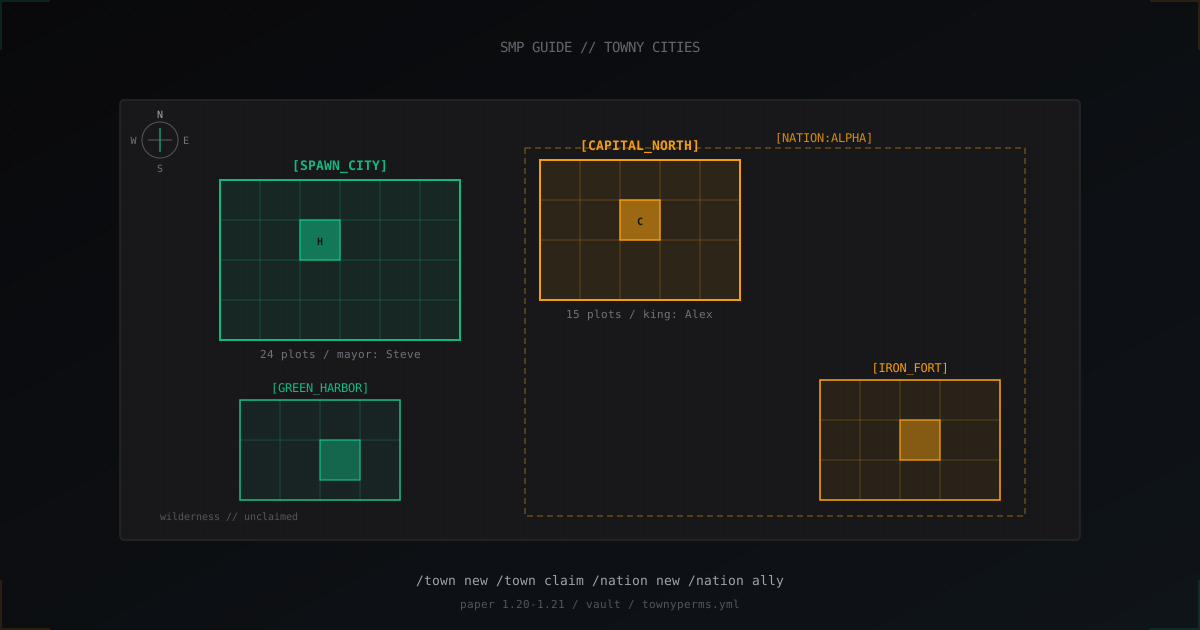
Towny: complete guide to running an SMP with cities and nations
Full Towny setup on Paper 1.20-1.21: commands, townyperms.yml, taxes, SiegeWar wars, web map, LuckPerms and anti-grief in one place.
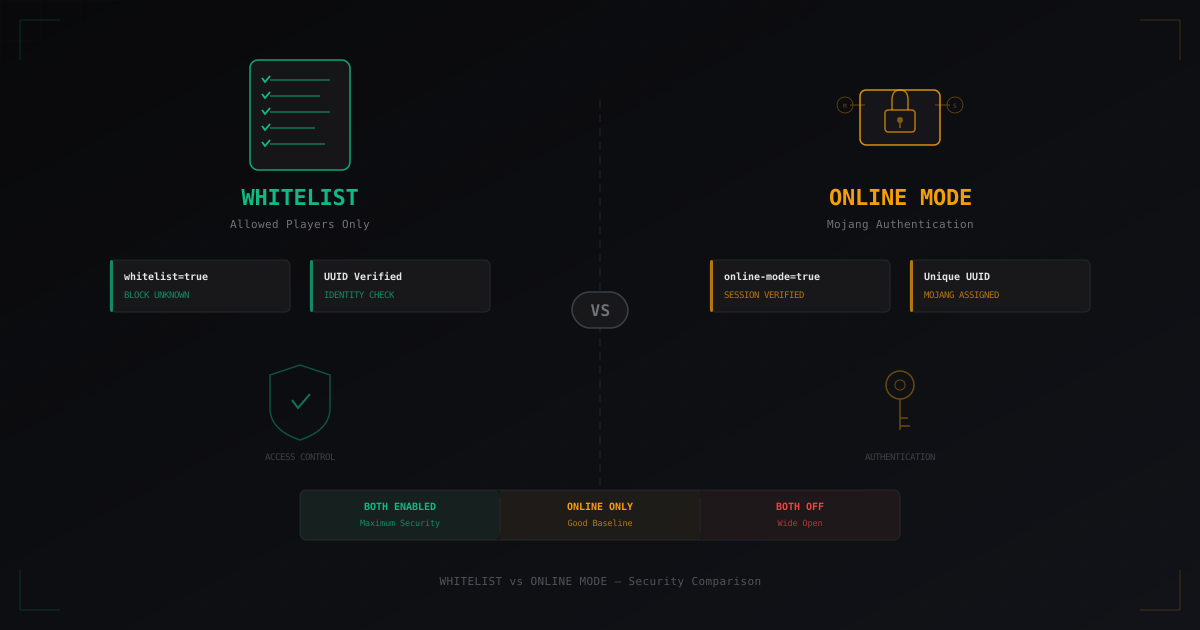
Whitelist vs Online Mode in Minecraft - What's More Secure?
Breaking down the difference between whitelist and online-mode: how Mojang authentication works, why UUID matters, cracked server security risks, protecting offline servers with AuthMe, and why you should combine both mechanisms.
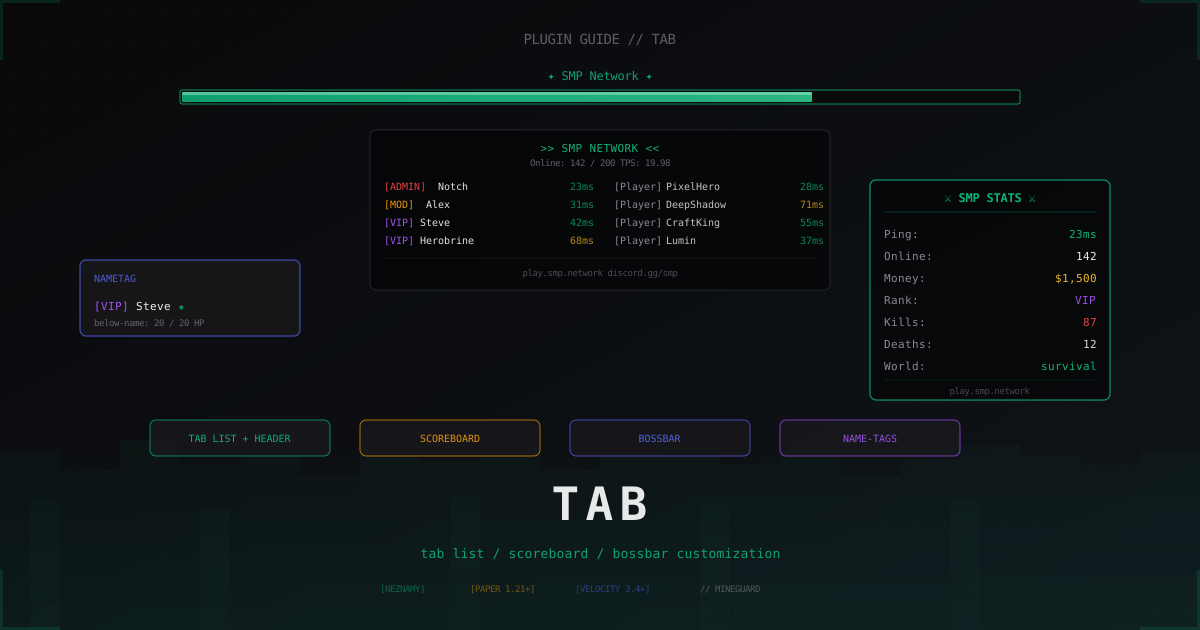
TAB plugin: tab list, scoreboard and BossBar customization (2026)
One plugin covers tab list, scoreboard, BossBar, name-tags and LuckPerms prefixes. We walk through TAB by NEZNAMY: install, proxy mode, sorting, anti-override and real config.yml snippets.