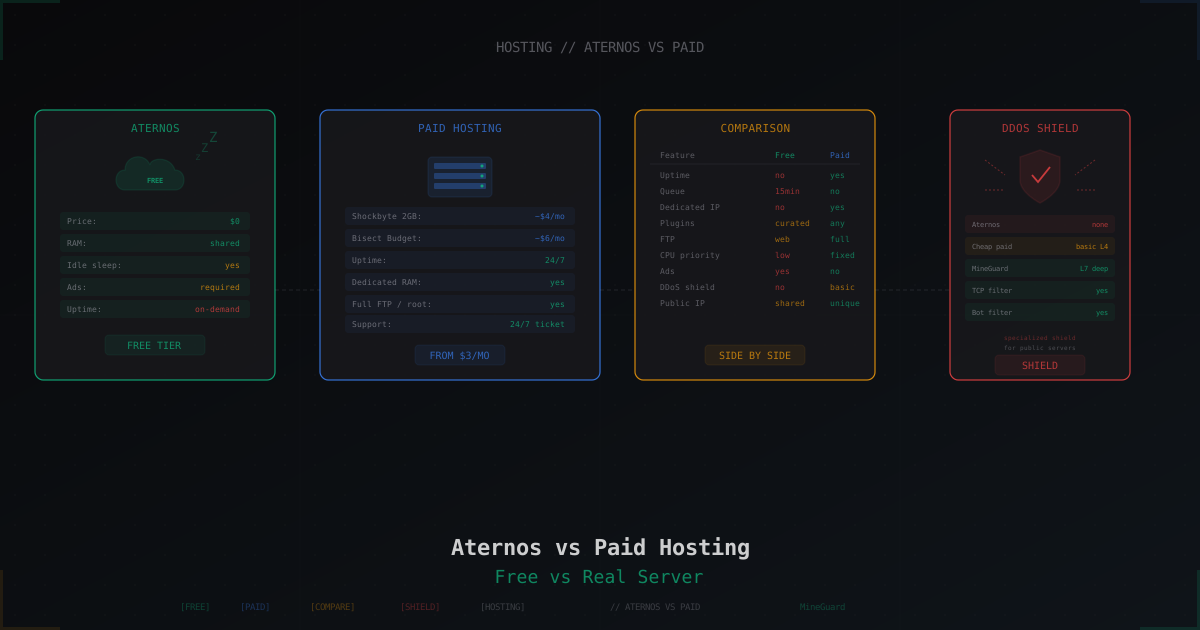
Aternos vs Paid Hosting: When Free Is Enough and When It Isn't
Spin up a free Minecraft server in 30 seconds, no credit card, no signup paperwork. That's Aternos. Millions of players started exactly like this: opened the site, hit a button, dropped the IP into a Discord channel. The real question is different: where does the free tier actually stop working, and when do you need to pay for real hosting?
Let's break it down piece by piece: what Aternos gives you in 2026, where its ceiling is, which alternatives are worth looking at (Minehut, Exaroton, Falix), and when it really is time to move to paid hosting.
What Aternos is and how it works
Aternos is a shared platform, mostly Java, some Bedrock support. The whole business model runs on ads: the server only starts when someone hits "Start" in the panel, runs while players are online, and sleeps when empty. By 2026 they host around 10 million servers, all running on shared physical nodes.
Core properties of Aternos:
- On-demand startup. Server is not running 24/7. Each start goes through a queue.
- Idle sleep. Once the server is empty (or everyone is AFK), a timer ticks and shuts the process down.
- Shared RAM and CPU. Resources are not fixed, they're split with neighbors on the same node.
- Ads are mandatory. Adblockers are detected and will block the server from starting with a message: "You are using an adblocker".
- No root access. Only the panel: plugins from their curated list, mods from their curated list, configs via web UI.
These aren't really downsides. They're the contract. Aternos takes no money, and in exchange it doesn't promise production-grade hosting.
Aternos limits in 2026
RAM
RAM on Aternos is dynamic. There's no exact published number, the server requests as much as it needs within reason. In practice, heavy modpacks top out somewhere around 2.5-4 GB, and past that you start hitting crashes or lag spikes. Nobody gets "8 GB guaranteed", that's simply not a thing there.
Slots
Aternos technically doesn't cap slots, you can set 50. In practice, past 10 active players on a single server you'll see lag, broken connections, tickrate drops. Realistic comfortable ceiling: 5-10 people online at once.
Storage
4 GB per server. Fine for vanilla with a world or two, but a modpack with dozens of mods and Applied Energistics storage eats through it fast.
Idle timeout
If the server is empty or everyone AFK, it sleeps. The timer starts when all slots are empty or someone has been idle for a few minutes. Aternos doesn't publish the exact number, but from experience it's around 5 minutes without players.
Queue
During peak hours, free startups wait in a queue. 5 to 15 minutes is normal. A Donator subscription skips the queue, but that's no longer free.
Ads and adblock
Aternos is financed entirely through ads. Adblockers are detected, and while yours is on, the server won't start. This is a hard rule: no ad impressions means no startup.
Domains and IP
Your server IP is a subdomain like yourname.aternos.me. It's publicly resolvable. You get a custom subdomain, but the underlying IPs are shared across the whole platform.
The good side of Aternos: when it really is fine
Aternos isn't a toy. It's a working tool for specific scenarios:
- Testing a plugin or mod. Need to check if Paper 1.21 still works with your new plugin? Aternos, 30 seconds.
- Playing with 2-3 friends in the evening. Get together, play an hour, call it. Server sleeps. Tomorrow, start it again.
- Kids' world for 5 school friends. Vanilla survival, no reason to keep it up 24/7.
- One-off event server. Meet up for a minigame once.
- Learning admin work. Try plugins, set up LuckPerms, figure out configs. No money at risk.
For all of these scenarios, Aternos is the best thing on the market. It's free and covers the basics.
The bad side of Aternos
Idle sleep kills the public-server experience
The server sleeps when nobody is online. For personal play, fine. For a public server, catastrophic. A player finds your IP in a listing, tries to join, and the server is off. They won't try a second time.
Adblock is a real problem
A significant chunk of players run uBlock or Brave. For them, Aternos breaks at the startup screen. Fix: whitelist aternos.org. Not everyone wants to.
Slow start
From hitting "Start" to "Server started" you wait 30 seconds to a few minutes if there's a queue. For friends, fine. For a public listing, you lose 90% of click-throughs.
No DDoS protection
This is the big non-obvious one. Aternos doesn't filter attacks. If a botnet hits your server, it just goes down, and you can't bring it back up until the attack stops. Paid hosts usually have at least basic L4 protection, and specialized filters like MineGuard handle bot logins inside the game protocol itself.
Shared IP
All Aternos servers live behind shared node IPs. If a neighbor on your node gets attacked, you suffer too. The IP reputation in Minecraft server listings can also be dirty because of other servers on the same address.
No root, no arbitrary plugins
Want a custom plugin that's not in the Aternos catalog? Can't have it. Their catalog isn't the whole internet. Want custom JVM flags? No. Want your own Java build? No.
Free alternatives: Minehut, Exaroton, Falix
Minehut
Minehut is the direct competitor to Aternos. On the free plan in 2026:
- 2 GB RAM, 500 MB storage
- Max 10 slots
- Server active up to 4 hours per day
- Unlimited plugin slots from their catalog
- Clean panel, built-in server listing within the Minehut network
Minehut wins on panel design and discoverability (players find servers through the in-network lobby). But 4 hours a day is a hard ceiling. Play more than that, you hit it daily.
Exaroton
Exaroton is pay-as-you-go from the same team behind Aternos. You pay only for real uptime:
- 1 credit = 1 GB RAM × 1 hour
- 100 credits = 1 euro
- Server can auto-sleep when idle (configurable)
Math: 4 GB running 24/7 for a month = 4 × 24 × 30 = 2880 credits = about 28.80 euro. Expensive for always-on. But if you play 3-4 hours a day, it comes out to 3-5 euro/month, and it's much more flexible than Aternos: no ads, more control, better performance.
Exaroton is the sweet spot between free and fixed-price paid hosting.
Falix (FalixNodes)
Falix offers free Minecraft hosting without a hard hour cap:
- 2-4 GB RAM depending on availability
- Up to 3 servers per account
- Sleep on idle (like Aternos)
- Basic built-in DDoS filtering
- Geo-restriction: free tier is only available in some countries
Falix is a solid option if Aternos frustrates you with queues and the adblock rule. But the geo filter cuts off a chunk of users.
Comparison table
| Platform | RAM | Uptime | Queue | Ads | DDoS | Slots |
|---|---|---|---|---|---|---|
| Aternos | up to ~4GB shared | on-demand | 5-15 min | required | no | ~10 comfy |
| Minehut | 2GB | 4h/day | no | no | basic | 10 |
| Exaroton | per plan | on-demand | no | no | basic | none |
| Falix | 2-4GB | on-demand | no | no | basic | none |
Paid hosting: what $3-5 actually gets you
The bottom tier of paid Minecraft hosts in 2026 looks like this:
| Host | 2 GB RAM (monthly) | Notes |
|---|---|---|
| Shockbyte | ~$4 | Old, stable. NA/EU nodes. |
| BisectHosting Budget | ~$6 | Includes dedicated IP and unlimited slots. |
| Apex Hosting | $7.49 first month | Renewal is higher. Heavy upsell. |
| Regional budget hosts | $2-4 | Local nodes often perform better for their region. |
For this money you get:
- Dedicated RAM. Those 2 GB are yours, nobody shares them.
- 24/7 uptime. Server runs always, even when you sleep.
- Full FTP. Upload any plugins, mods, JAR builds, configs.
- Console root access. Your own commands, your own JVM flags.
- Dedicated IP. Your own reputation, your own port rules.
- Support. Ticket system, typical response an hour or two.
Caveat: the bottom tier is literally "basic hosting". CPU performance can be mediocre (many nodes crammed on one Xeon), and the DDoS protection is usually formal. Many providers advertise "basic L4" or "30 Gbps included", but that doesn't save you from targeted attacks, especially Minecraft-specific ones with bot loggers.
Comparison on key metrics
Performance
On Aternos, TPS drops regularly because the node is shared across dozens of servers. On paid $3-5 you get a fixed CPU slice, stable 20 TPS as long as you don't overload with plugins or mods. On cheap Shockbyte that's steady 20 TPS for 10-15 players.
Ping and location
Aternos has nodes in several regions, but auto-routing often sends you to a neighboring country. On paid hosting, you pick the location yourself (EU Central, US East, a specific DC). For EU players, the difference between an Aternos node in Germany and a regional paid host can be 30 ms vs 5 ms.
Support and uptime
Aternos answers via a forum. Hours to a day of waiting. Paid hosts run tickets with 15-60 minute response, sometimes Discord. Explicit SLA isn't always in the fine print, but 99%+ uptime is routine for any decent provider.
Monetization and growth
If you dream of running a public donation-funded server, Aternos isn't your path. Selling gold, running a shop, donor packages, this isn't practical there. Technically possible, but when the server shuts down after 5 idle minutes, players won't come back.
When Aternos is enough
Honest checklist for "Aternos works":
- Playing with 2-5 friends on Discord voice
- No public listing plans
- OK with 30-60 seconds of startup wait
- OK with ads / willing to whitelist the site
- No need for plugins outside the Aternos catalog
- No need for 24/7 uptime
- No donation plans
All boxes checked: use Aternos. It's the best option for this case.
When you need paid
Signs Aternos is already holding you back:
- Public server. People find it through listings, players join from random places.
- 10+ concurrent players. Aternos gets unstable here.
- Want custom plugins or custom code. Especially something unique to your project.
- Already have an audience. You're building an SMP, anarchy, minigames.
- No patience for idle sleep. Need the server to answer any time.
- Plans to monetize. Donation shop, VIP ranks, cosmetics.
In these cases, Aternos just doesn't work. Paid hosting is the answer.
The budget ladder: $0 to $30/month
Rough tiers and what you pay for:
- $0 (Aternos/Minehut): play with friends, test plugins
- $3-5 (Shockbyte 2GB, Bisect Budget): small public SMP for 5-10 people
- $8-15 (Bisect Premium 4GB, Apex): solid public server, 15-30 players, scripted plugins
- $20-40 (4-8 GB with good CPU): serious project, 50-100 online, modpacks
- VPS $15-30 + self-host: full control, Pterodactyl panel, multiple servers, fully custom setup
Each step up buys more freedom and performance. No need to skip tiers. 2 GB on Shockbyte covers 80% of a beginner admin's needs.
Migrating from Aternos to paid
When you decide to move, here's the checklist:
1. Export the world
Aternos lets you download the world file through the panel: Worlds -> Download. You get a ZIP with all dimensions (world, world_nether, world_the_end).
2. Save configs
Through the Aternos file manager, download everything in:
plugins/
config/
server.properties
bukkit.yml / paper.yml / spigot.yml
ops.json / whitelist.json
3. Save player data
world/playerdata/
world/stats/
These are inventories, XP, achievements. Without them all players start from scratch.
4. Deploy on the new host
Upload via FTP, drop the world into the root, drop the plugins/ folder inside. Make sure the Paper/Spigot version matches (otherwise the world file can break).
5. Switch DNS / announce the new IP
Share the new address with players. If you have your own domain, set up an SRV record.
6. Verify everything works
Log in, check inventory, walk around bases. Something missing? You probably forgot part of the playerdata export.
Protection: why it matters
Free platforms like Aternos don't protect against DDoS. At all. If your server is attacked, it goes down, full stop. For a private server that's no big deal, but for a public server it's a survival question.
Paid hosts usually have "basic L4 protection". That means filtering volumetric attacks (SYN flood, UDP flood). But modern Minecraft attacks are often not volume-based, they're smart bots that join the game like real players, occupy fake slots, spam console logs, trigger lag with commands. That needs application-level defense.
MineGuard parses traffic at the Minecraft protocol level: it tells a bot apart from a player based on the handshake, filters login spam, and protects UDP voice traffic (if you use voice mods like PlasmoVoice). That's not just "we drop incoming packets", it's content-aware filtering.
Once your server steps into the public eye, an attack is a question of when, not if. Either pick hosting with real protection from the start, or add an external filter on top of whatever host you're on.
Bottom line
Aternos is a genuinely great platform for its niche. Free, fast, no friction. For vanilla play with friends, it's the best choice out there.
But the moment you outgrow the "me and three friends in the evening" format, you run into idle sleep, queues, RAM ceilings, no protection, and unstable TPS. At that point, $3-5 a month on Shockbyte or Bisect pays for itself in a week.
The sweet spot for people who play irregularly is Exaroton with its hourly billing. You pay only for live time and get flexibility without free-tier limits.
One rule: don't chase a bigger plan before you actually need it. But don't cling to free when it's actively hurting your project either.
Protect Your Server from DDoS Attacks
Free protection with 5-minute setup. 1 TB bandwidth included.
Try for FreeRelated Articles
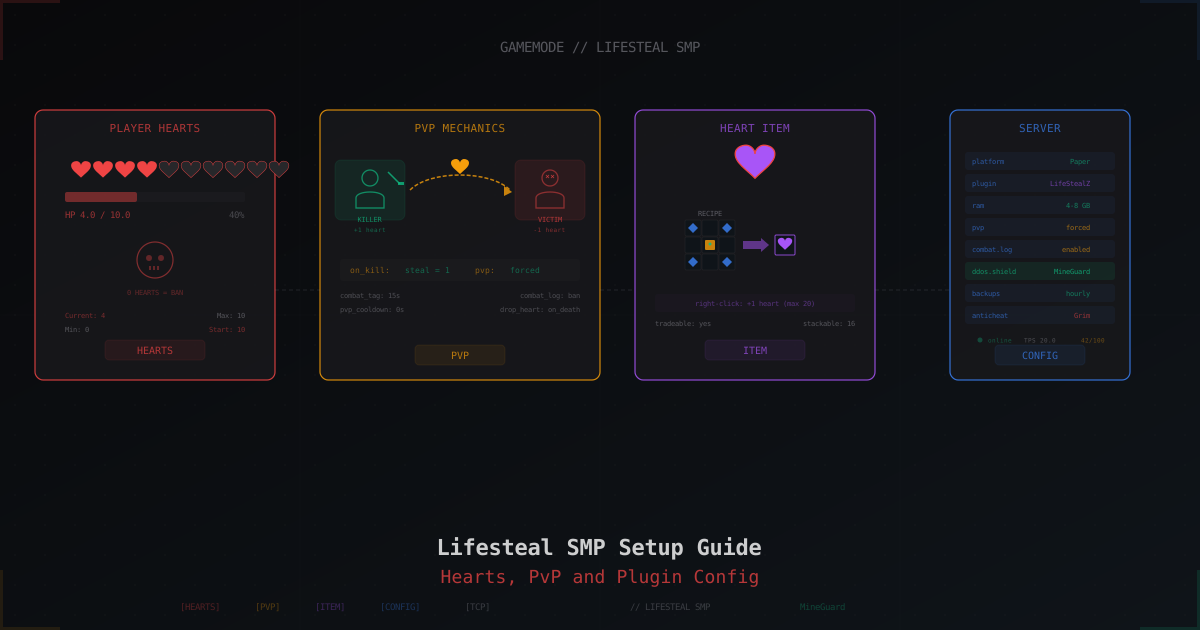
Lifesteal SMP Server: How to Set It Up From Scratch (2026)
Lifesteal SMP is the hottest gamemode on Minecraft YouTube. Kill a player, steal their heart. Zero hearts means permanent ban. Here is the full plugin, config and rules setup.
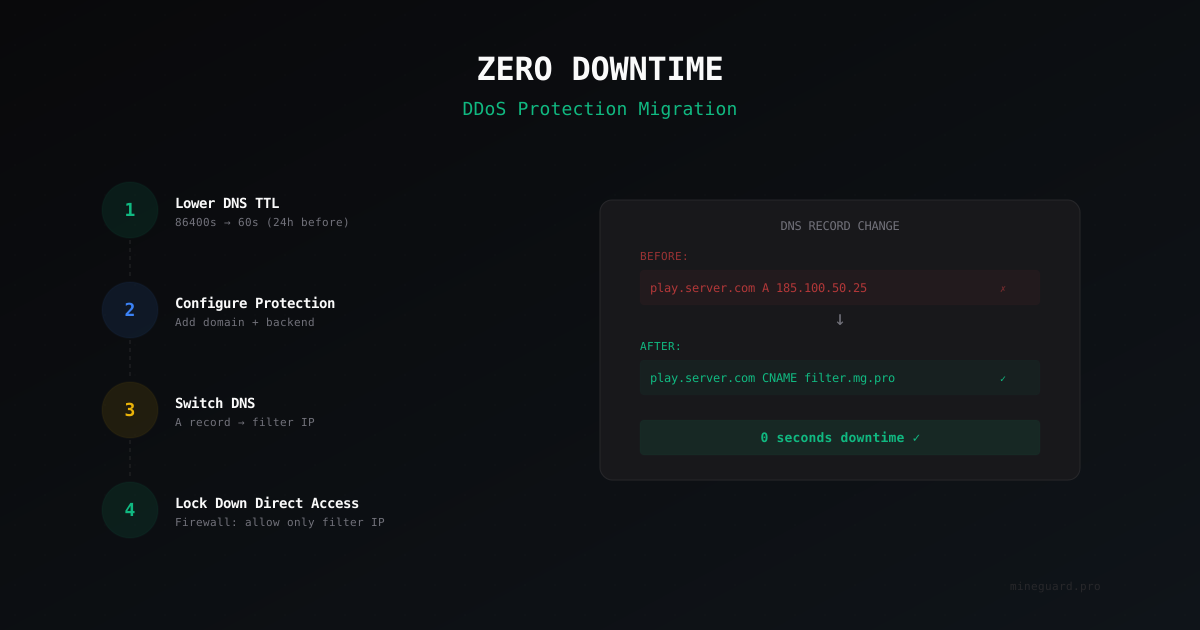
How to Migrate Your Minecraft Server to DDoS Protection with Zero Downtime
A step-by-step guide to moving your Minecraft server behind DDoS protection via DNS. No player loss, no downtime, no panic.
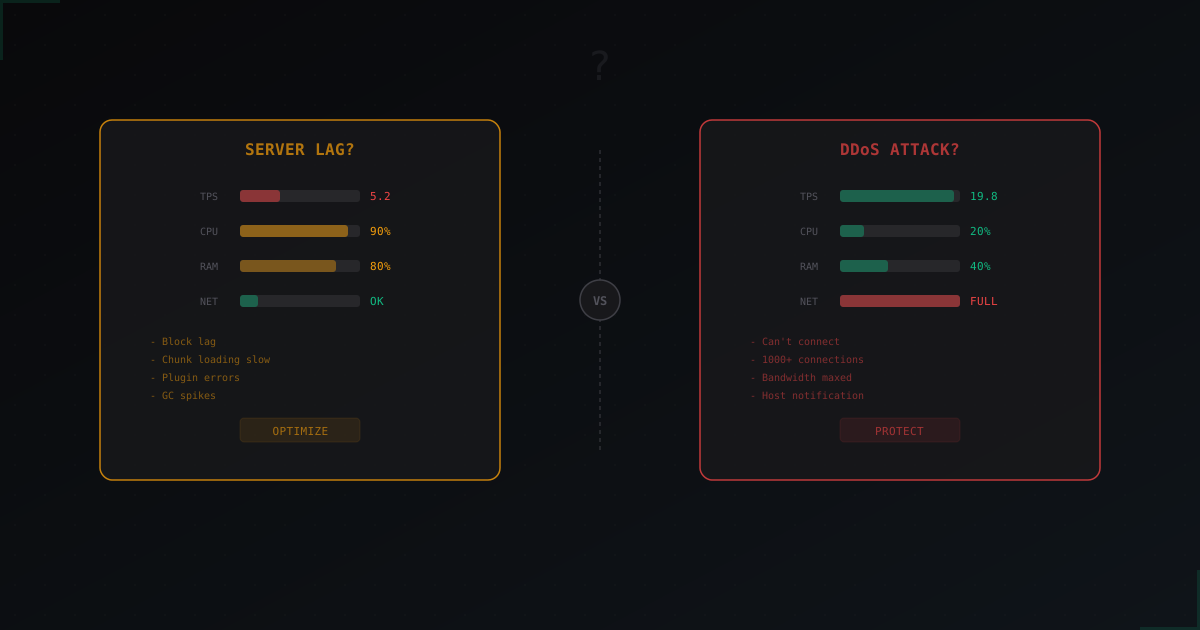
Minecraft Server Lagging: DDoS or Server Problems?
Your Minecraft server started lagging, players are complaining, and you can not tell if it is an attack or something broke on the server.