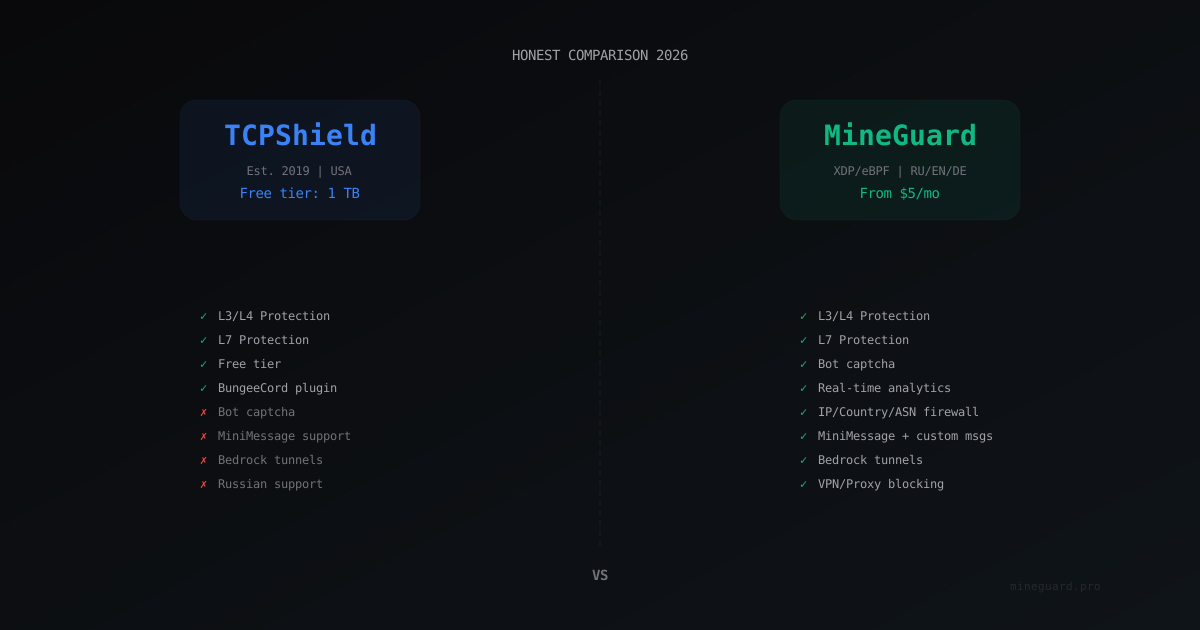
TCPShield vs MineGuard: Honest DDoS Protection Comparison for Minecraft in 2026
If you run a Minecraft server, DDoS protection is not a matter of "if" but "when." Two services that come up regularly in community discussions are TCPShield and MineGuard. Both solve the same core problem, but they approach it differently and cater to different audiences.
We put together an honest comparison to help you figure out which service fits your project best.
A Quick Overview
TCPShield is one of the most well-known DDoS protection services in the Western Minecraft community. Operating since 2019 and based in the US, it gained popularity largely thanks to its free tier offering 1 TB of traffic per month. This made it a go-to starting point for countless small servers. It integrates with BungeeCord and Velocity through its own plugin.
MineGuard is our service specializing in Minecraft server protection. While we primarily serve the Russian-speaking community, we work with servers worldwide. We stand out with our built-in captcha system for bot verification, custom block messages with MiniMessage support, and detailed real-time analytics.
Feature Comparison
Before diving into the details, here is the big picture:
| Feature | TCPShield | MineGuard |
|---|---|---|
| DDoS protection (L3/L4) | Yes | Yes |
| DDoS protection (L7) | Yes | Yes |
| Free tier | Yes (1 TB) | No |
| Bot captcha | No | Yes (built-in) |
| Custom block messages | Limited | Yes (MiniMessage) |
| Real-time analytics | Basic | Detailed |
| IP/Country/ASN firewall | Partial | Yes |
| VPN/Proxy blocking | Partial | Yes |
| Bedrock tunnels | No | Yes |
| BungeeCord/Velocity integration | Plugin | Native |
| Servers in Russia | No | Yes (Moscow) |
| Russian-language support | No | Yes |
| Starting price | Free / ~$25 | ~$5 (390 RUB) |
DDoS Protection: The Core
Both services handle the typical DDoS attacks that Minecraft servers face - network-level flood attacks (L3/L4) and application-level botnet attacks (L7). That is the baseline expectation, and neither disappoints here.
TCPShield operates through an Anycast network with multiple points of presence globally, which provides solid routing and load distribution. For servers with a Western audience, this works well.
MineGuard has filtering servers in Germany (Frankfurt) and Russia (Moscow). For servers in Russia and CIS countries this makes a real difference - players connect through the Moscow filter with minimal latency instead of going through Europe with extra 30-40ms. TCPShield does not have servers in Russia, their infrastructure is focused on Western markets.
We run a proprietary filtering engine built specifically around the Minecraft protocol. The filter analyzes packets at the game protocol level, which allows it to distinguish bots from real players more accurately. In practice, this means fewer false positives during botnet attacks.
Captcha System
This is where things diverge significantly. We have a built-in captcha system - when suspicious activity is detected, the player is kicked with a message containing a link to a web page. They open it in their browser, pass Google reCAPTCHA, and can then reconnect to the server. It is an effective way to filter out bots without disrupting real players. The captcha is configurable: you can set the trigger threshold, customize appearance, and tailor messages.
TCPShield does not offer this feature. Bot protection works at the network filtering level, which is less precise when dealing with advanced botnets that mimic real client behavior.
If your server regularly faces botnet attacks, web-based captcha verification is a real difference-maker.
Customization and MiniMessage
We let you fully customize the messages players see when they are blocked, during captcha, and in other scenarios. It supports the MiniMessage format, which is the de facto standard for text formatting in modern Minecraft servers. Colors, gradients, clickable links - it is all there.
TCPShield offers limited message customization. Basic settings are available, but without the same level of flexibility.
For servers where branding and a consistent player experience matter, this is a notable advantage.
Analytics and Monitoring
We provide detailed real-time analytics: traffic graphs, attack information, stats on blocked bots and IPs, connection geography. The dashboard gives you a clear picture of what is happening with your server right now.
TCPShield also offers analytics, but with less depth. Basic traffic metrics are available, while deep real-time attack analysis is not.
If understanding what happens during and after an attack matters to you, we provide more data to work with.
Firewall and Blocking
We offer a full-featured firewall with the ability to block by IP, subnet, country, and ASN (autonomous system number). Worth highlighting separately is the VPN/Proxy blocking feature - the service detects connections through VPNs and proxies, allowing you to block them or redirect them to captcha.
TCPShield has basic filtering tools, but without the same granularity. ASN blocking and VPN detection are not available on all plans or are limited.
For servers that want tight control over who connects, our firewall gives you more options.
Bedrock Support
We support Bedrock tunnels, which means it can protect servers accepting connections from Bedrock clients (mobile, console, Windows 10). In 2026, cross-platform servers are common, and protecting Bedrock traffic is increasingly important.
TCPShield is primarily focused on Java Edition and does not offer native Bedrock connection protection.
Pricing
This is where things get interesting.
TCPShield wins with its free tier. 1 TB of traffic per month is enough for a small server with a couple dozen players. However, paid plans start at around $25/month, and for serious protection with advanced features, the price climbs quickly.
MineGuard does not have a free tier, but the starting price is 390 RUB/month (roughly $5). For that price, you already get captcha, firewall, analytics, and custom messages. For servers that need real protection rather than just proxying, this offers more value.
If you have a minimal budget and a small server without serious threats, TCPShield's free tier can be a good starting point. If you are willing to pay and want the full toolkit, we offer more for less.
Support
We provide Russian-language support. For the CIS community, this is a huge plus. When your server is under attack and you need to resolve an issue urgently, communicating in your native language saves time and stress. Support is available through a ticket system and responds promptly.
TCPShield offers English-language support. For English-speaking server owners, that is perfectly fine, but it can be a barrier for Russian-speaking administrators, especially under pressure.
Integration and Setup
TCPShield integrates well with BungeeCord and Velocity through its plugin. The setup process is documented and straightforward - connecting takes about 10-15 minutes.
We also support all major server platforms. Setup is just as easy - you update your DNS record and install a plugin if needed.
In terms of ease of setup, the two services are roughly on par.
Who Should Choose What
Choose TCPShield if:
- You need free protection for a small server
- Your audience is primarily English-speaking
- Your server does not face serious targeted attacks
- You use BungeeCord/Velocity and value their plugin ecosystem
Choose MineGuard if:
- Your server targets a Russian-speaking audience
- You deal with botnet attacks and want captcha verification
- Detailed analytics and real-time monitoring matter to you
- You need country/ASN-based firewall rules and VPN blocking
- You run a cross-platform server (Java + Bedrock)
- Full message customization via MiniMessage is important
- You need Russian-language support
Conclusion
Both services do their job - they protect Minecraft servers from DDoS attacks. TCPShield is deservedly popular in the Western community and works great as a zero-budget starting point. we offer a more advanced toolkit tailored to the real threats servers face in 2026, and does so at an accessible price.
There is no perfect solution for everyone. Evaluate your needs, budget, and audience, and the right choice will become clear.
Protect Your Server from DDoS Attacks
Free protection with 5-minute setup. 1 TB bandwidth included.
Try for FreeRelated Articles
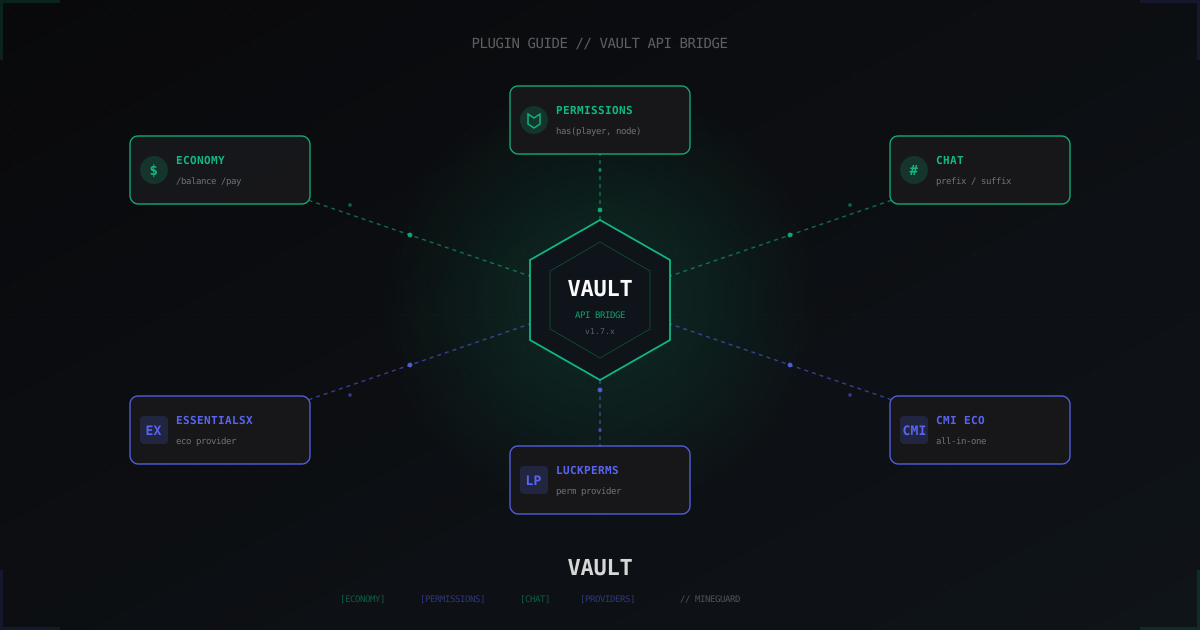
Vault Plugin Minecraft: Economy and Permissions API Bridge (2026)
What the Vault plugin is for Minecraft, how economy and permission providers work, and how to fix the no compatible economy plugin found error.
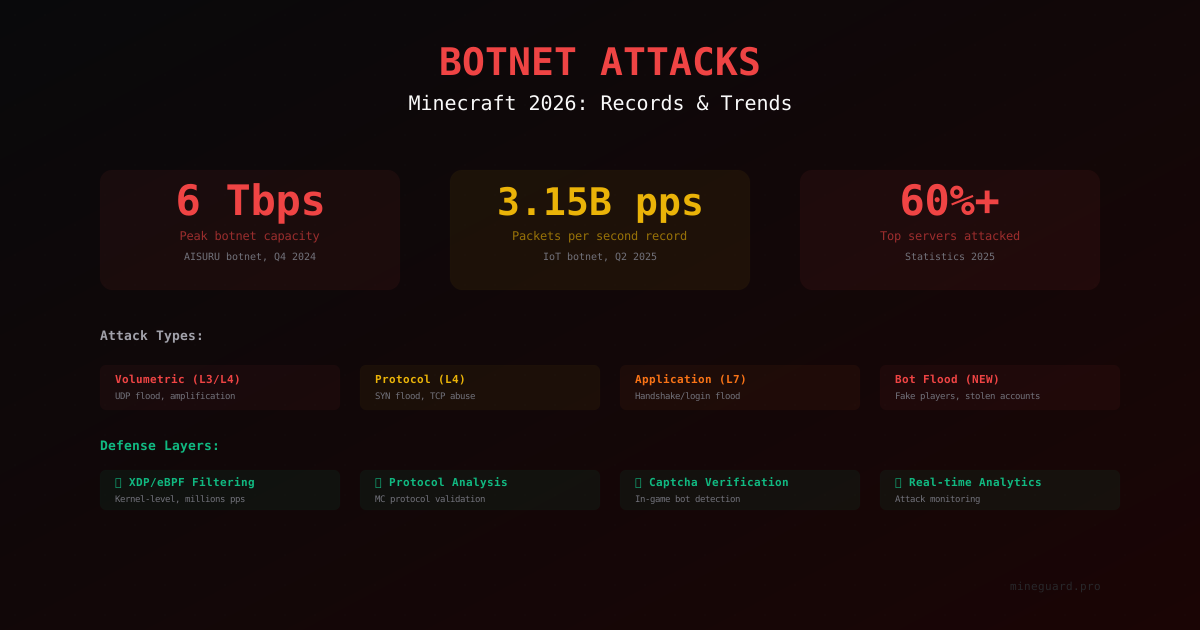
Botnet Attacks on Minecraft in 2026: Records, Trends, and How to Protect Yourself
Record-breaking DDoS attacks on Minecraft servers in 2024-2026: 6 Tbps botnets, 3.15 billion packets per second, next-gen bot floods.
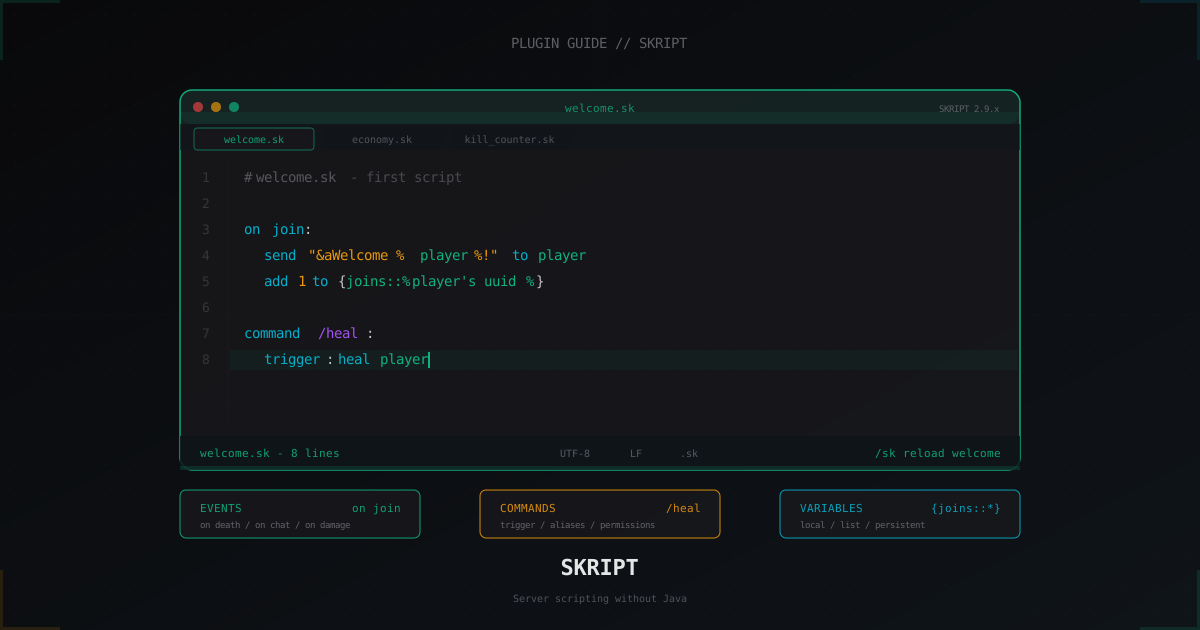
Skript: scripting basics for Minecraft server admins (2026)
Skript lets you ship server logic without learning Java. Install, syntax basics, events, commands, variables, addons like skBee and skript-yaml, common pitfalls and how to dodge them.