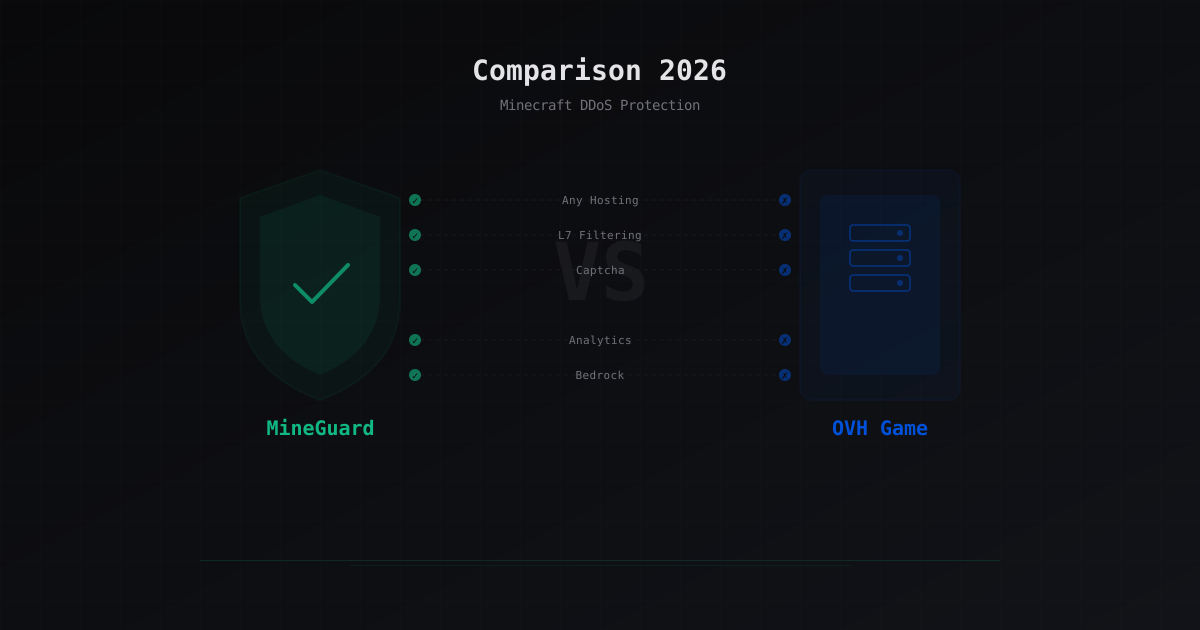
MineGuard vs OVH Game DDoS Protection: Which Is Better for Minecraft
When I was choosing protection for my Minecraft server, OVH Game DDoS Protection was one of the first options I considered. And that makes sense: OVH is one of the largest hosting providers in the world, and they have a dedicated Game lineup with DDoS protection. But the deeper I dug, the more I realized that more specialized solutions exist for Minecraft. In this article, I will compare MineGuard and OVH Game DDoS Protection across all key parameters.
What Is OVH Game DDoS Protection
OVH offers a Game server lineup that includes hardware-based DDoS protection. It is not a standalone product but part of their hosting package. When you rent a Game server from OVH, the protection comes bundled. It filters traffic at the network level (L3/L4), blocking volumetric attacks before they reach your server.
Sounds good. But there are nuances.
What Is MineGuard
MineGuard is a specialized proxy filter built specifically for Minecraft. I do not just filter traffic by ports and protocols. I analyze every connection at the Minecraft protocol level, verify handshakes, validate packets, and determine whether it is a real player or a bot.
The main difference: MineGuard works with any hosting. You are not locked to a specific provider. Your server can be on OVH, Hetzner, a local provider, or even at home. MineGuard sits in front of it as a protective layer.
Hosting Lock-In: The Key Difference
This is the most important difference between the two solutions.
OVH Game DDoS Protection only works on OVH servers. If your Minecraft server is on a different host, you simply cannot use this protection. You would have to migrate your entire server to OVH, which is not always possible or cost-effective. Maybe you have a great deal with your current provider, or you need a data center in a specific region, or you simply do not want to change your infrastructure.
MineGuard works as an external proxy. You just change your DNS record, and traffic starts flowing through our filters. Your server stays where it is. Migration takes 5 minutes, not days.
For me, this was the deciding factor. I do not want to be locked to one provider just because of DDoS protection.
Filtering Geography
MineGuard has filtering servers in Germany (Frankfurt) and Russia (Moscow). For servers targeting Russia and CIS countries this makes a real difference - players connect through the Moscow filter with minimal latency instead of going through Europe with extra 30-40ms. OVH Game servers are located mostly in France and Canada, with no servers in Russia. If your audience is from CIS, the ping difference is noticeable.
L7 Attack Filtering: Where OVH Falls Short
OVH handles volumetric L3/L4 attacks well. SYN floods, UDP floods, amplification attacks are all filtered effectively. But when it comes to application-layer (L7) attacks, things change.
L7 attacks on Minecraft are not just HTTP requests. They are bot connections that mimic real players. They complete handshakes, send correct packets, and look like legitimate traffic. OVH does not analyze the Minecraft protocol because their protection is universal. It works the same for all games and services.
MineGuard parses every Minecraft protocol packet. I know what a real connection looks like and what a bot looks like. The filter checks:
- Handshake correctness
- Login sequence packet validity
- Connection behavior patterns
- Packet speed and ordering
- Client data uniqueness
If a bot tries connecting with hundreds of copies simultaneously, MineGuard sees this and blocks it. OVH only sees TCP connections and cannot tell a bot from a player.
Captcha: A Check OVH Does Not Have
One of MineGuard's most powerful features is the built-in captcha. When we detect suspicious activity, new connections go through verification right inside Minecraft. The player lands on a limbo server, completes a simple check, and continues playing. Bots cannot do this.
OVH offers nothing like this. Their protection operates at the network level and does not interact with the game protocol. If a bot can establish a TCP connection and send basic packets, OVH will let it through.
Analytics and Control
MineGuard provides detailed analytics through a web panel:
- Real-time connection counts
- Player geography
- Blocked bot statistics
- Traffic graphs
- Attack history
You see everything happening with your server and can make data-driven decisions.
OVH offers basic statistics through their control panel. You see total traffic volume and when protection triggered. But there is no detailed information about Minecraft connections because the protection does not know it is Minecraft.
Firewall and VPN Blocking
MineGuard includes a built-in firewall that lets you block connections by country, IP range, and connection type. There is also VPN and proxy blocking, which matters for servers fighting ban evasion.
OVH offers a basic firewall through their control panel, but without Minecraft-specific features like VPN detection.
Bedrock: Missing Support
MineGuard supports Bedrock tunnels on the "Optimal" plan and above. This means players on mobile devices and consoles can connect to your Java server through a protected channel.
OVH Game DDoS Protection offers nothing like this. If you need Bedrock support, you will have to set it up yourself, and the Bedrock traffic will not be protected.
Pricing: An Honest Comparison
Comparing prices directly is difficult because these are different product types. OVH sells hosting with protection, MineGuard sells protection separately.
MineGuard Plans:
| Plan | Price | Features |
|---|---|---|
| Free | 0 RUB | Basic protection, 1 network |
| Basic | 390 RUB/mo | Advanced filtering, 1 network |
| Starter | 860 RUB/mo | 2 networks, extended analytics |
| Optimal | 2,790 RUB/mo | Captcha, Bedrock, VPN blocking |
| Professional | 8,600 RUB/mo | 10 networks, 150TB traffic |
OVH Game:
Game server prices start at roughly 50-60 euros per month. But remember: that is the price for the entire server, not just protection. If you are happy with OVH as a host, protection comes free.
But if you already have a server on another host, MineGuard will cost less than migrating to OVH. And if you need L7 protection, OVH will not cover that need anyway.
Comparison Table
| Parameter | MineGuard | OVH Game DDoS |
|---|---|---|
| Product type | Specialized proxy | Hosting with protection |
| Works with any hosting | Yes | No, OVH only |
| L3/L4 filtering | Yes | Yes |
| L7 filtering (Minecraft) | Yes, deep | No |
| Minecraft protocol analysis | Yes | No |
| Built-in captcha | Yes | No |
| Connection analytics | Detailed | Basic |
| VPN blocking | Yes | No |
| Firewall | Minecraft-specific | General |
| Bedrock support | Yes (from "Optimal") | No |
| Servers in Russia | Yes (Moscow) | No |
| Free plan | Yes | No |
| Setup | 5 minutes (DNS change) | Requires migration |
When OVH Game Is a Good Choice
I want to be honest. OVH Game DDoS Protection is a solid solution in certain situations:
- You already use OVH and are happy with their hosting
- Your server mostly faces volumetric attacks (L3/L4)
- You do not need captcha, analytics, or L7 filtering
- You do not plan to switch hosts
In these cases, OVH's built-in protection works well and costs nothing extra.
When MineGuard Is the Better Choice
MineGuard is worth choosing if:
- Your server is not on OVH or you do not want to be locked to one provider
- You face bot attacks at the L7 level (which is increasingly common)
- You need captcha for player verification
- You want detailed connection analytics
- You need Bedrock support
- You have a limited budget (free plan available)
Conclusion
OVH Game DDoS Protection is good baseline protection that comes bundled with hosting. For servers that are attacked rarely and only at the network level, it may be enough.
But the world of Minecraft attacks has changed. Modern botnets operate at the application layer, mimicking real players. Universal protection cannot handle this. You need a solution that understands Minecraft from the inside.
MineGuard was built for exactly this. I do not offer hosting. I offer protection that works with any host and understands every Minecraft protocol packet. Try the free plan and see the difference for yourself.
Protect Your Server from DDoS Attacks
Free protection with 5-minute setup. 1 TB bandwidth included.
Try for FreeRelated Articles
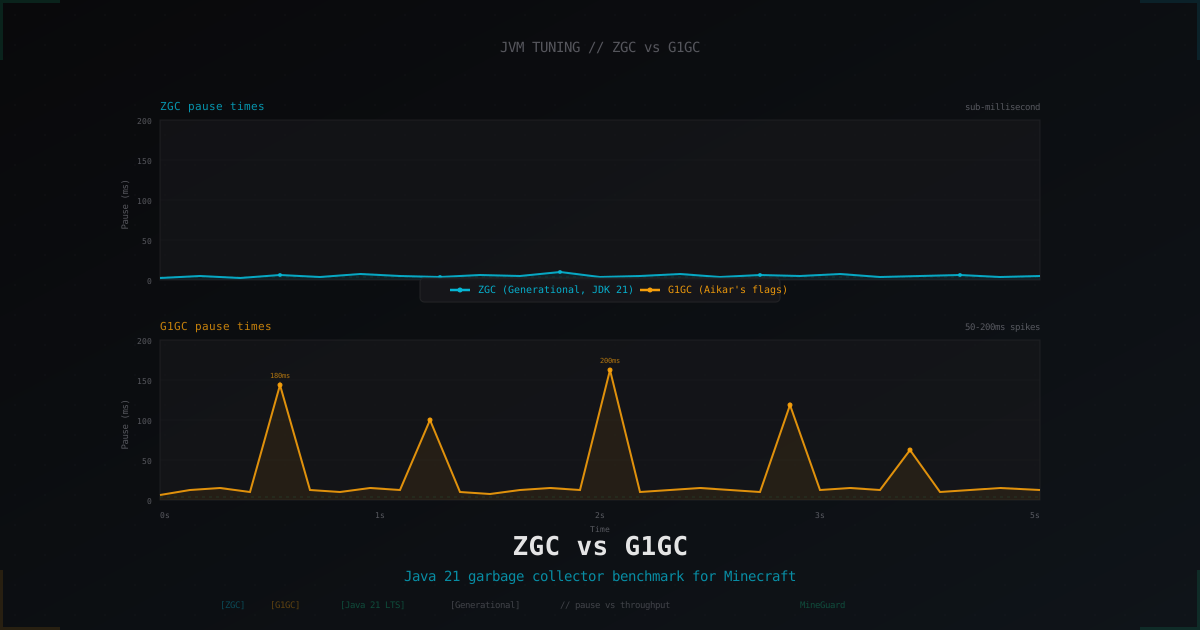
ZGC vs G1GC for Minecraft on Java 21: benchmarks and choice (2026)
Java 21 made Generational ZGC stable and no longer a toy. We dig into where it actually beats a tuned G1GC with Aikar's flags, and where good old G1 is still the right call for a Minecraft server.
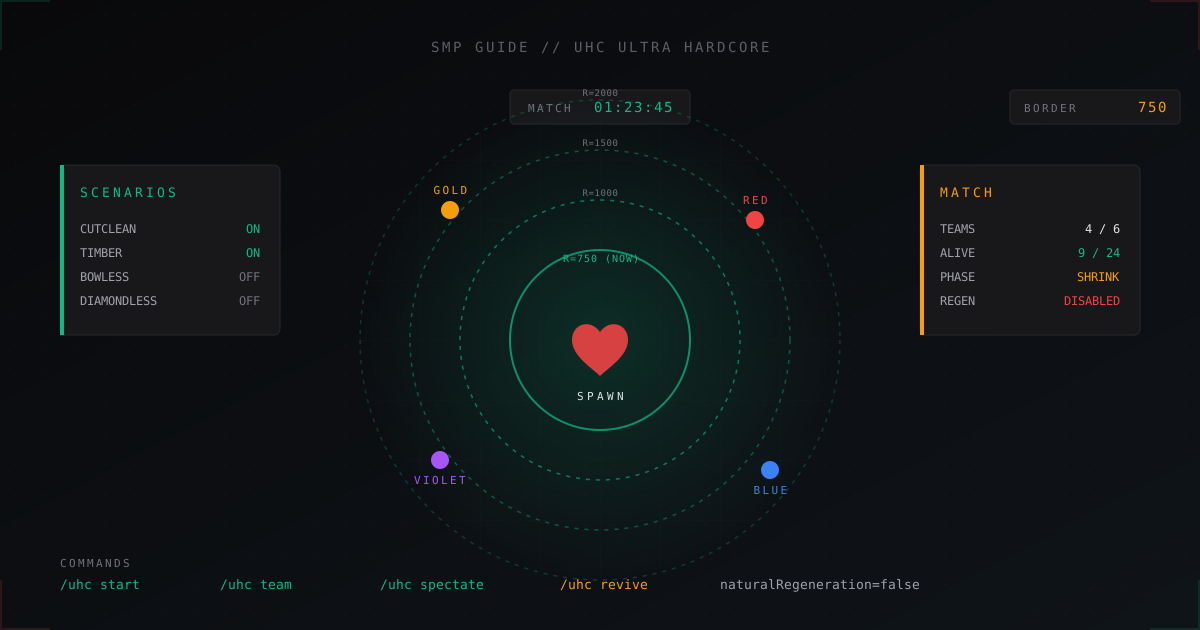
UHC Server Setup From Scratch: Ultra Hardcore Without Regen Guide
How to launch an Ultra Hardcore server: naturalRegeneration gamerule, plugins, scenarios, shrinking border, anticheat and world pre-generation.
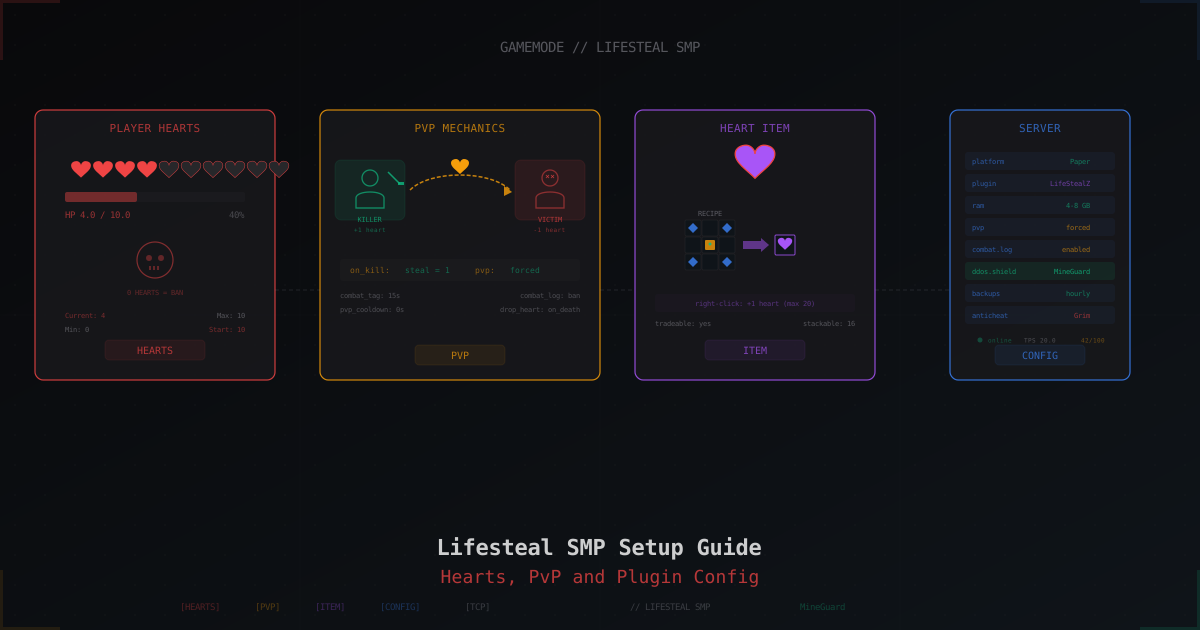
Lifesteal SMP Server: How to Set It Up From Scratch (2026)
Lifesteal SMP is the hottest gamemode on Minecraft YouTube. Kill a player, steal their heart. Zero hearts means permanent ban. Here is the full plugin, config and rules setup.