Minecraft Server in Russia 2026 - Hosting, Protection & Specifics
Running a Minecraft server targeting Russian and CIS players in 2026 comes with a unique set of challenges. From choosing the right hosting to handling DDoS attacks, from payment processing to understanding local ISP quirks - this guide covers everything you need to know.
The Russian Hosting Market
The minecraft server russia hosting market offers several tiers of providers.
Specialized game hosting. Companies like TimeWeb, FirstVDS, and others offer pre-configured Minecraft hosting with Russian datacenter locations. Prices start from 200-500 RUB/month for basic plans. Main datacenters sit in Moscow and Saint Petersburg.
VPS/VDS providers. Selectel, Timeweb Cloud, and VDSina offer virtual servers where you can deploy Minecraft manually. More control, lower cost, but requires Linux administration skills. Moscow-based VPS delivers 1-3 ms ping to local players.
Dedicated servers. For projects with 50+ concurrent players, dedicated hardware is the way to go. Starting from 3000-5000 RUB/month (roughly $30-50) for entry-level configs.
European hosting. Some admins choose Hetzner, OVH, or Netcup for better price-to-performance ratio. The trade-off is 30-50 ms extra latency for Russian players. Acceptable for survival servers, problematic for competitive PvP.
Key selection criteria
- CPU clock speed matters more than core count - Minecraft is single-threaded. Look for 4.5+ GHz.
- NVMe SSD is mandatory. Chunk generation and world saves on HDD cause noticeable lag.
- Network: minimum 100 Mbps, ideally 1 Gbps. Voice chat plugins (PlasmoVoice) increase bandwidth needs.
- Location: Moscow datacenters provide the best coverage for Russian and CIS audiences.
- DDoS protection: the single most important factor, covered below.
Russian ISP Specifics
Several infrastructure peculiarities affect minecraft server hosting for russian players.
Traffic inspection systems (TSPU). Russian ISPs run government-mandated deep packet inspection equipment. While it rarely affects Minecraft traffic directly, it can introduce occasional latency spikes during peak hours.
Suboptimal routing. Traffic between Russian cities doesn't always take the shortest path. Packets from Rostov to Moscow might route through Saint Petersburg, adding 10-15 ms. Major ISPs (Rostelecom, MTS, MegaFon, Beeline) usually have direct peering, but smaller regional providers may not.
CG-NAT prevalence. Many Russian residential ISPs use Carrier-Grade NAT, meaning players share public IP addresses. This can complicate IP-based banning and cause issues with non-standard ports.
Slow IPv6 adoption. Most residential connections in Russia are still IPv4-only. Plan accordingly - IPv6-only hosting won't work for the majority of Russian players.
The DDoS Landscape
DDoS attacks are the primary operational threat for any visible Minecraft server in Russia. The local attack ecosystem is active and affordable.
Attack frequency. Every popular server gets attacked sooner or later. Competition between servers, extortion attempts, and disgruntled players are common motivations.
Local botnets. A significant portion of attacking traffic originates from Russian IP addresses. This means filtering at overseas locations may be less effective - the attack traffic doesn't cross international links where it could be scrubbed.
Common attack types:
- UDP floods targeting the game port
- TCP SYN floods exhausting connection tables
- Bot join floods mimicking real player connections
- Query/ping floods overloading the status response mechanism
Why Local Filtering Matters
This is the critical point for anyone running a minecraft server for russian players. The location of your DDoS filtering node directly impacts player experience.
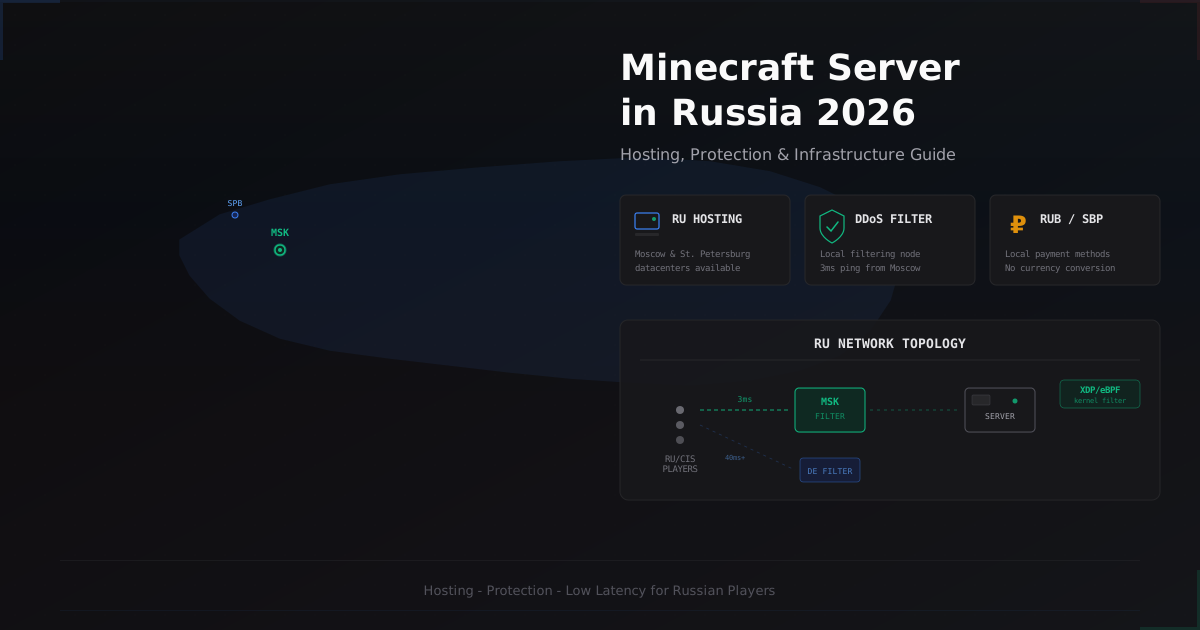
Overseas filtering (Frankfurt, Amsterdam). Player traffic from Moscow travels: Moscow - international link - Europe - filter - international link back - game server. Added latency: 30-50 ms.
Moscow-based filtering. Traffic from Moscow reaches the filter through local peering with minimal hops. Added latency: 1-5 ms.
That 30-50 ms difference is significant for PvP gameplay. On competitive servers (BedWars, SkyWars, practice), every millisecond of hit registration delay matters.
MineGuard addresses this with a geo-routing approach: CIS traffic routes through the Moscow filtering node (around 3 ms from Moscow), while European traffic uses the Frankfurt node. Players get protection without the latency penalty.
Payment Options
Handling payments for a Russian-targeted server requires understanding the local financial landscape.
Accepting payments in RUB. Russian payment gateways (YooKassa, FreeKassa, Enot.io) support Mir cards, bank transfers, and SBP (Russia's instant payment system). SBP has become the dominant payment method in 2026 - instant transfers with minimal fees.
Paying for services. Some international services don't accept Russian bank cards. Workarounds include cryptocurrency, cards from friendly jurisdictions, or Russian payment intermediaries. Services targeting the Russian market increasingly add local payment options.
Server monetization. For selling ranks and cosmetics, Tebex (BuyCraft) with Russian payment integration is the standard. Direct SBP transfers work for smaller communities.
Community Specifics
The Russian Minecraft community has distinct characteristics worth understanding.
Language. All server interfaces, rules, and announcements must be in Russian. English-only interfaces are a dealbreaker for the Russian audience.
Discovery. Server monitoring sites (minecraft-inside.ru, minecraftrating.ru) are the primary player acquisition channel. SEO and paid advertising are secondary.
Popular modes. SkyWars, BedWars, anarchy (2b2t-style), modded survival with custom wipes, and RPG servers dominate the Russian market.
Seasonality. Peak activity hits during summer break (June-August), winter holidays (late December - early January), and after major Minecraft updates.
Voice chat. PlasmoVoice integration is practically mandatory for survival and RPG servers in the Russian community.
Quick Start Plan
- Pick a Moscow-based VDS with 4-8 GB RAM and NVMe storage.
- Install Paper or Purpur as your server core. Use Velocity if running multiple servers.
- Configure firewall rules (iptables/nftables), close unnecessary ports.
- Connect DDoS protection with a local filtering node before you gain visibility.
- Set up monitoring (Prometheus + Grafana) for TPS, memory, and player count.
- Register on Russian server monitoring sites.
- Set up RUB payment processing if you plan to monetize.
Summary
Running a Minecraft server in Russia in 2026 is entirely viable. The key factors for success: Moscow-based hosting for low latency, DDoS protection with a local filtering node, Russian payment methods (SBP, Mir), and understanding the local community's expectations around language, voice chat, and server discovery channels. Get the infrastructure right, and you can build a thriving community.
Protect Your Server from DDoS Attacks
Free protection with 5-minute setup. 1 TB bandwidth included.
Try for FreeRelated Articles
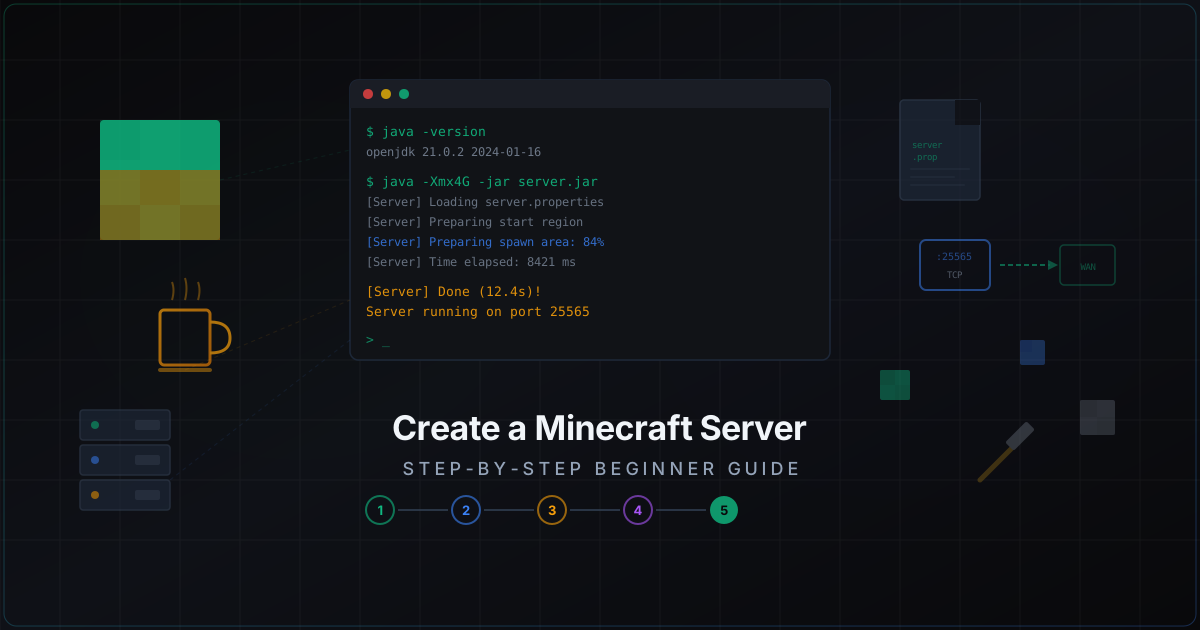
How to Create a Minecraft Server from Scratch
Step-by-step guide to creating a Minecraft server: choosing the right Java version, downloading the server jar, configuring server.properties, port forwarding, accepting EULA, first launch, installing plugins, and basic optimization tips.
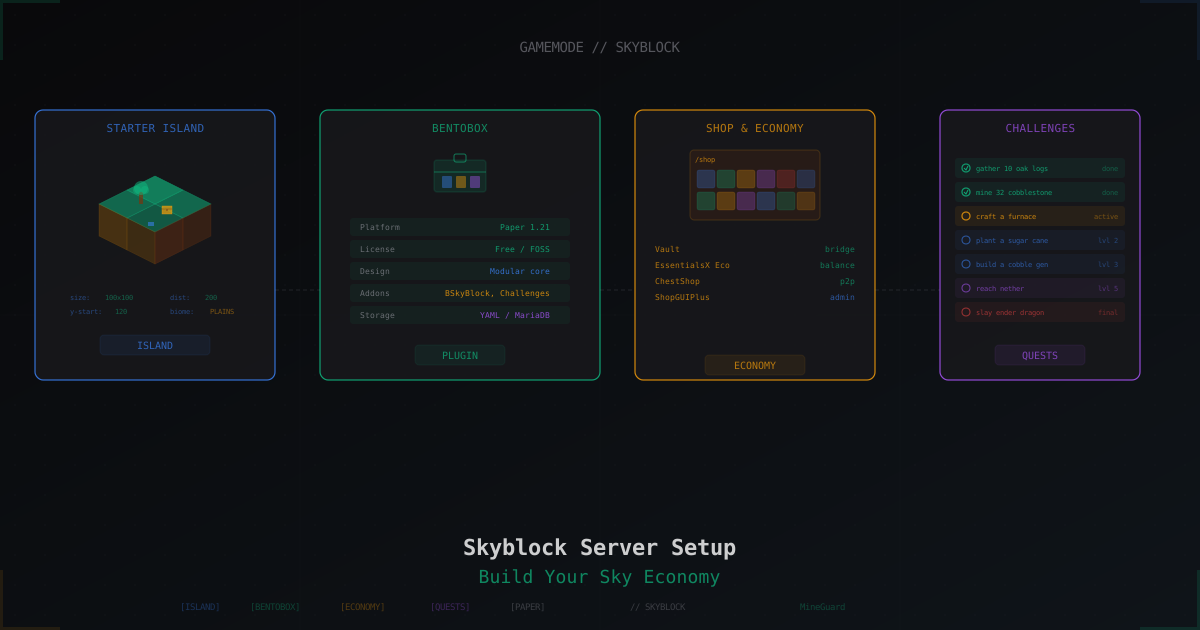
Skyblock Server from Scratch: Setup with BentoBox and Beyond
Complete guide to launching a Skyblock server on Paper 1.21: BentoBox with BSkyBlock, alternatives like SuperiorSkyblock2 and ASkyBlock, economy setup, challenges, island levels, and anti-griefing.
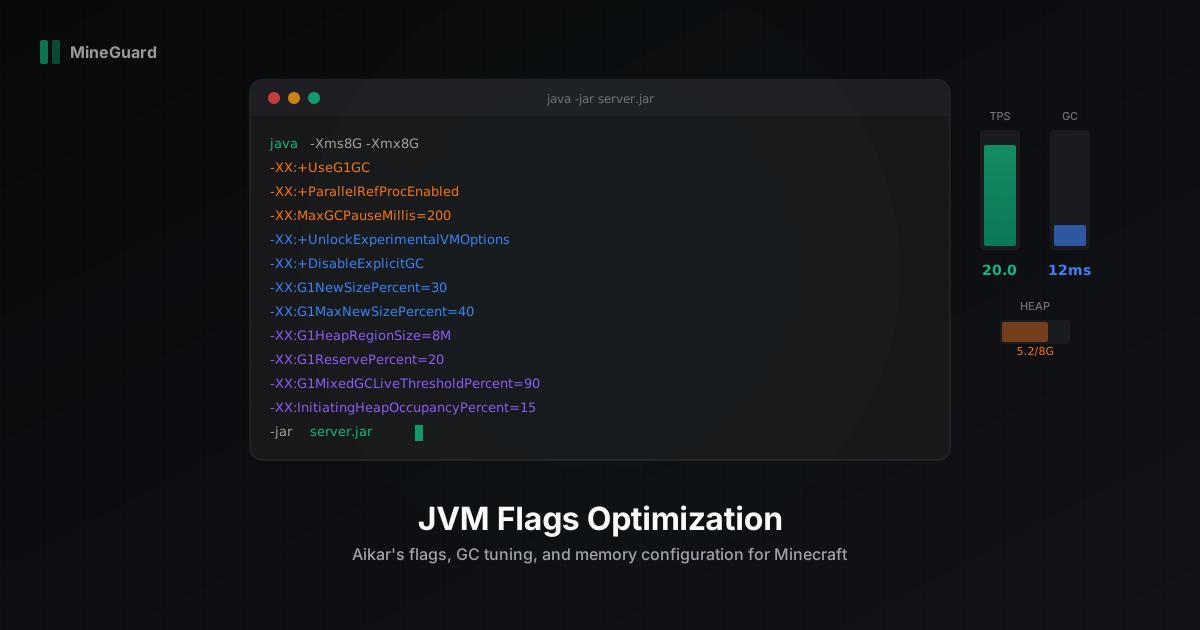
Java JVM Flags Optimization for Minecraft Servers: The Complete Guide
Master Aikar's flags, understand G1GC vs ZGC, configure memory correctly, and get copy-paste ready flag sets for any server size. A practical guide to JVM optimization for Minecraft.