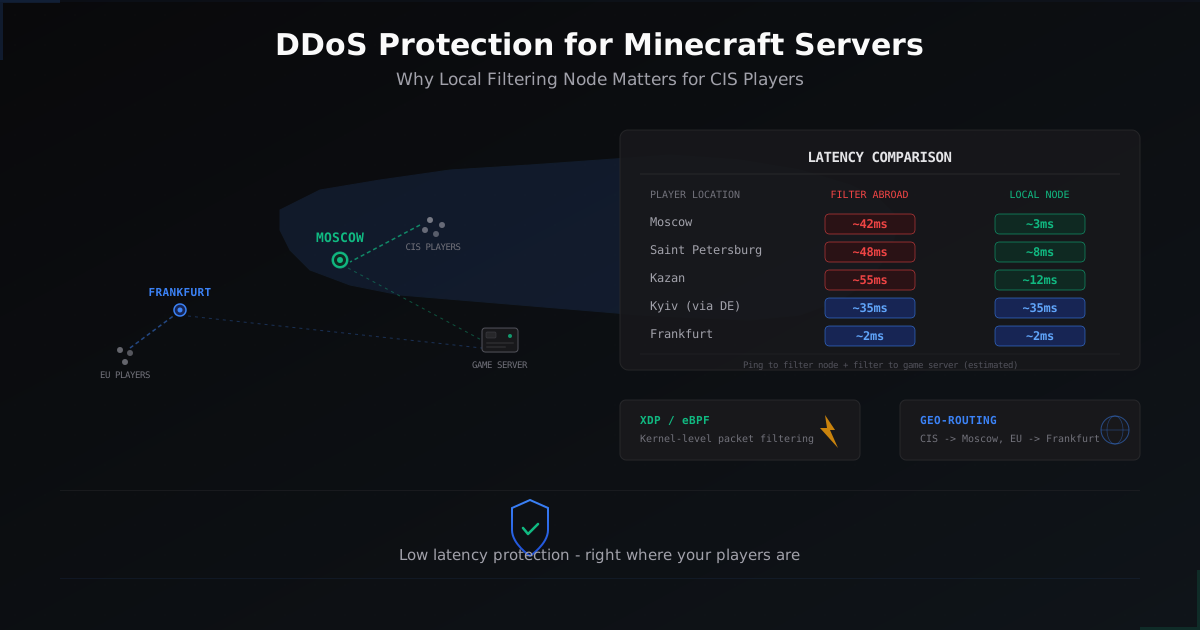
DDoS Protection for Minecraft Servers in Russia - Why Local Filtering Matters
If you run a Minecraft server in Russia and have ever dealt with DDoS attacks, you have probably noticed a common problem. Most protection services are located in Europe - Germany, Netherlands, sometimes France. This creates a real headache for your CIS players.
Let us break down why the location of a filtering node matters, how an extra 30-40 milliseconds affects gameplay, and why servers with a Russian audience need local traffic filtering.
The Problem: Filter in Europe, Players in Russia
Say you have a server in Moscow. Most of your players are from Russia, Belarus, Kazakhstan. You connect DDoS protection, and traffic starts routing through a filtering node in Frankfurt.
What happens with every packet from a Moscow player:
- Packet travels from Moscow to Frankfurt (~40ms one way)
- Filter processes the packet (~0.1-1ms)
- Clean packet goes back to the server in Moscow (~40ms)
- Server response goes back through Frankfurt to the player
Result: a Moscow player on a Moscow server gets 80-100ms ping instead of 3-5ms. And that is the best case - with a stable route. In practice, routes through Europe often go through multiple transit nodes, adding even more latency.
For a player from Kazan, it is worse - traffic goes to Moscow first, then Frankfurt, then back. From Novosibirsk or Yekaterinburg, the extra delay can be 60-80ms each way.
Why Latency Matters in Minecraft
"It is just 40 milliseconds" - some might say. But in Minecraft, these milliseconds make a huge difference.
PvP and Combat
Minecraft uses server-side hit detection. When you hit a player, the client sends a packet to the server, and the server decides if the hit lands. With high ping:
- You see the opponent in one position, but on the server they have already moved
- Your hits do not register even though visually you are connecting
- Combo attacks (knockback chains) become unstable
- The player with lower ping has a clear advantage
On servers with Practice PvP, KitPvP, UHC, or Bedwars, a 40ms difference between players is basically an unfair advantage. Players feel it and start complaining.
Block Placement
Place a block - it appears with a delay. During fast building (bridging, speed-bridging in Bedwars) this is critical. A player can fall because the block has not registered on the server yet, even though the client already shows it.
At 3-5ms ping, blocks appear instantly. At 80-100ms, there is a noticeable delay, especially during speed-bridging.
Inventory Interactions
Dragging items, opening chests, using anvils - everything syncs through the server. With high ping, you get the classic "item snap-back" where you drag an item and it jumps back because the server has not processed the action yet.
How Geo-Routing Works
The solution is logical: if the main audience is in CIS, put a filtering node in Russia. If some players are from Europe, route them through a European node.
The Routing Logic
The system analyzes where a player connects from and automatically routes them to the nearest filtering node:
- Players from Russia and CIS (Belarus, Kazakhstan, Kyrgyzstan) go to the Moscow node
- Players from Europe, Ukraine, and other regions go through the Frankfurt node
- Switching is automatic, no configuration needed from the server owner
This works at the DNS and anycast routing level. The player connects to the same address, but their traffic automatically hits the nearest filtering point.
Ukraine Routing
Players from Ukraine are automatically routed through Frankfurt due to the current geopolitical situation and unstable direct routes. This gives them a stable path with predictable ping (~30-40ms to filter + time to server). No restrictions or blocks - just optimal routing based on real network topology.
Latency Table
Here are approximate ping values for different cities. Assumes the game server is in Moscow.
European-only filtering (Frankfurt):
| Player City | Ping to Filter | Filter to Server | Total (approx) |
|---|---|---|---|
| Moscow | ~40ms | ~40ms | ~83ms |
| Saint Petersburg | ~45ms | ~40ms | ~88ms |
| Kazan | ~55ms | ~40ms | ~98ms |
| Yekaterinburg | ~65ms | ~40ms | ~108ms |
| Almaty | ~85ms | ~40ms | ~128ms |
| Frankfurt | ~2ms | ~40ms | ~44ms |
With Moscow node (geo-routing):
| Player City | Ping to Filter | Filter to Server | Total (approx) |
|---|---|---|---|
| Moscow | ~1ms | ~1ms | ~3ms |
| Saint Petersburg | ~6ms | ~1ms | ~8ms |
| Kazan | ~11ms | ~1ms | ~14ms |
| Yekaterinburg | ~20ms | ~1ms | ~22ms |
| Almaty | ~45ms | ~1ms | ~47ms |
| Frankfurt | ~2ms | ~40ms | ~44ms |
The difference is massive. A Moscow player gets 3ms instead of 83ms.
XDP and eBPF - Kernel-Level Filtering
Beyond node location, filtering technology matters. The classical approach processes packets in userspace. Each transition between kernel and userspace costs time.
What is XDP
XDP (eXpress Data Path) lets Linux process network packets right in the network card driver, before they enter the kernel network stack. This is the earliest possible point of packet processing.
Think of a pipeline:
- Packet arrives at the network card
- XDP processes the packet here - can drop, redirect, or pass it
- Kernel network stack (TCP/IP)
- Sockets
- Application
If a bad packet is dropped at step 2, it wastes zero CPU on steps 3-5. This means the filter can process millions of packets per second with minimal CPU load.
eBPF for Smart Filtering
eBPF (extended Berkeley Packet Filter) runs safe code inside the Linux kernel. For DDoS protection, this means filtering logic runs directly in the kernel without context switching to userspace.
Benefits:
- Speed: processing a single packet takes nanoseconds, not microseconds
- Efficiency: during a 10 Gbps attack, CPU load stays minimal
- Low latency: clean traffic passes through with virtually no added delay (0.01-0.1ms)
- Stability: even during massive attacks, legitimate players do not notice degradation
Minecraft-Specific Filtering
Minecraft traffic is TCP with characteristic patterns. Normal players send packets of certain sizes at certain frequencies. DDoS traffic looks different - wrong packet sizes, abnormal frequency, invalid TCP flags.
The eBPF filter analyzes each packet against rules: TCP connection validity, per-IP rate limiting, known botnet patterns, and geographic filtering when needed. All in nanoseconds, before the packet reaches the main network stack.
Key Takeaways
The location of a filtering node is not a marketing gimmick - it is a real technical factor that directly affects game quality. For servers with a CIS audience, local filtering removes the 40-80ms penalty that turns comfortable gameplay into a laggy experience.
- A European filter adds 40-80ms for CIS players
- Those milliseconds are critical for PvP, building, and overall game feel
- Geo-routing automatically sends traffic to the nearest node
- XDP/eBPF provides kernel-level filtering with minimal latency
- Ukrainian players work through the European node without restrictions
- The best protection is the one players do not notice
Protect Your Server from DDoS Attacks
Free protection with 5-minute setup. 1 TB bandwidth included.
Try for FreeRelated Articles
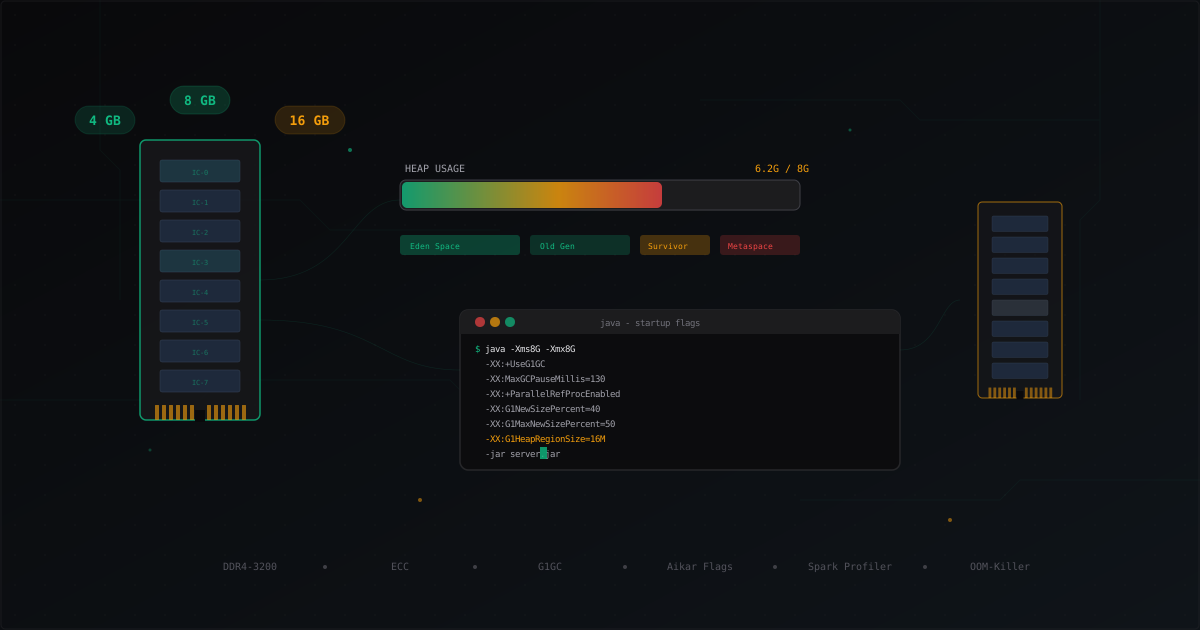
How Much RAM Does a Minecraft Server Need
A practical guide to choosing RAM for your Minecraft server: base requirements, per-player calculations, Paper vs Forge vs Fabric comparison, Aikar JVM flags, G1GC garbage collector tuning, and monitoring with spark.
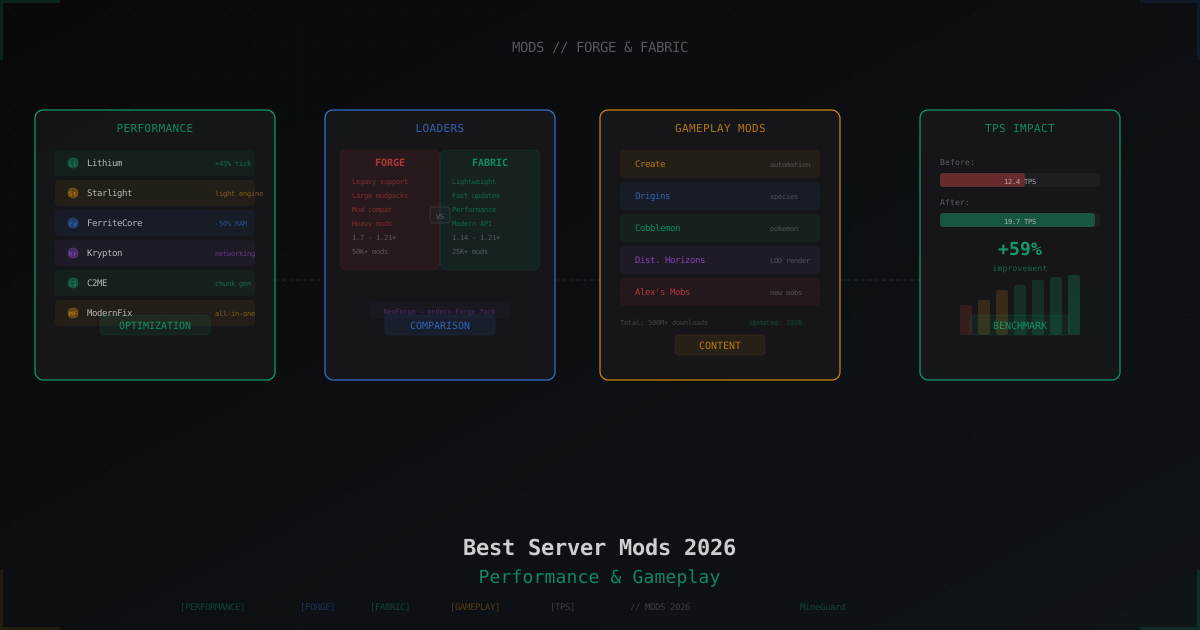
Best Minecraft Server Mods 2026: Forge, Fabric, and What to Install
Curated list of server-side Minecraft mods for 2026: performance, world gen, gameplay, utilities. Forge and Fabric covered separately with versions and compatibility tips.
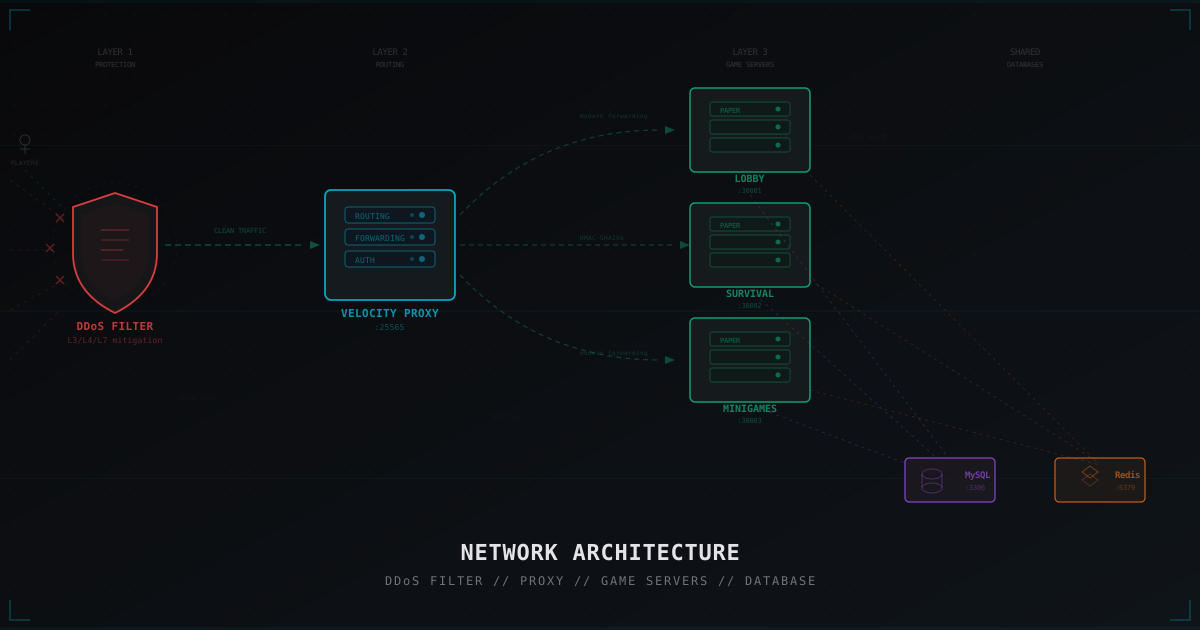
Minecraft Network Architecture: From Single Server to Full Cluster
Deep dive into Minecraft network architecture: from a single server to a full cluster with Velocity, backend servers, shared databases, and DDoS protection. Diagrams, configs, real examples.