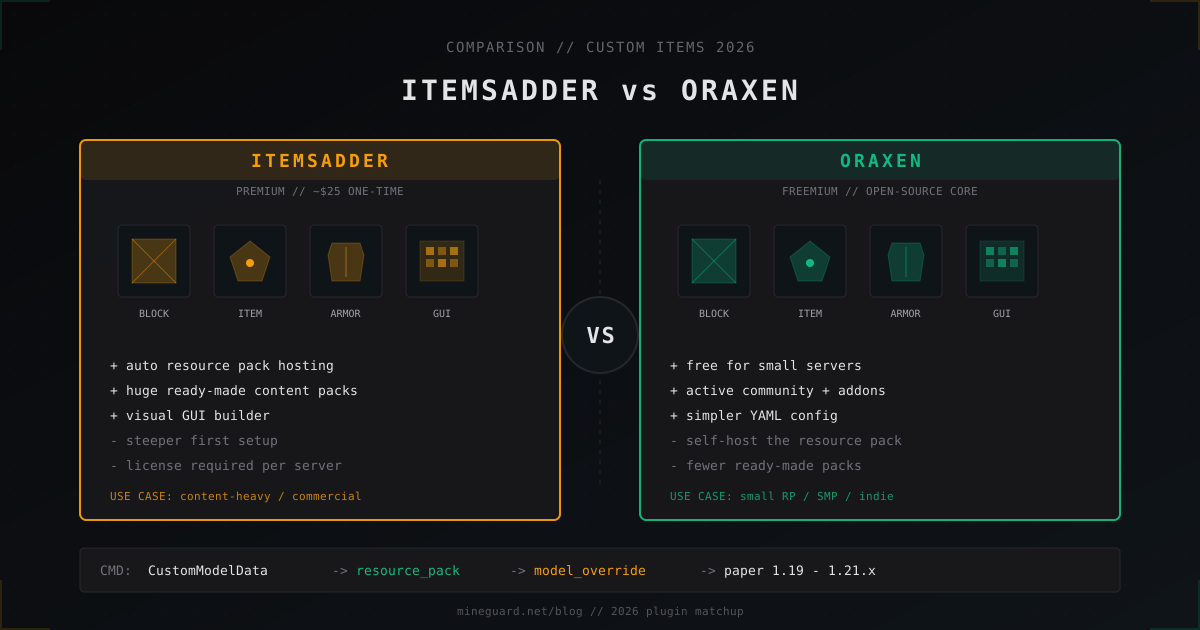
ItemsAdder vs Oraxen: which custom items plugin to pick in 2026
Custom items and blocks are no longer a feature reserved for big RPG networks. Even small SMPs add unique furniture, weapons or decorative blocks to stand out from the hundreds of generic projects. This guide breaks down ItemsAdder and Oraxen without fluff: what they share, where they diverge, and which one fits your scenario.
Why your server needs custom items
Vanilla Minecraft ships with around 1300 items. That works for survival, but the moment you push into RP, economy, quests or proper RPG gameplay, vanilla textures start to feel thin. Players see fifty identical iron swords and lose interest fast.
Custom items solve a few problems at once:
- unique loot you cannot get in vanilla
- decorative custom blocks for furniture, lamps, crates
- custom mobs and weapons for RPG mechanics
- visual branding that makes your server memorable
Both plugins lean on the same vanilla mechanism under the hood: CustomModelData in a resource pack. The server hands the player an item with a specific NBT tag, and the client renders a different model from the loaded pack. No client mods, works on plain Vanilla launcher.
# Simplified flow
item:
  material: PAPER
  custom_model_data: 100001
  display_name: "<gold>Ancient Map"
The pack stores assets/myserver/models/item/ancient_map.json mapped to custom_model_data: 100001. The client renders that instead of a paper sheet.
Both plugins automate the process: you write config, the plugin builds the resource pack and serves it to players.
ItemsAdder: what you get for $25
ItemsAdder is a premium plugin on SpigotMC by LoneDev, priced around 24.99 EUR per server with lifetime updates. The price tag is the main barrier for small projects, but you get a lot.
What is in the box:
- a huge library of community packs: furniture, weapons, armor, mobs, full themed sets
- automatic resource pack hosting through the built-in HTTP server or external CDN
- a visual GUI Builder for inventory menus without YAML
- integration with MythicMobs, ModelEngine, WorldGuard, Vault
- support for custom mobs with their own models, AI and animations through ModelEngine
- custom blocks via Note Block, String Block, Tripwire and Bonemeal hacks for variety
In practice ItemsAdder positions itself as a full-stack solution. Pay once, get the tooling for the entire content side of your server. Downsides: first-time setup intimidates beginners, the docs are scattered, and updates often need manual pack regeneration.
# config/items_adder/contents/myserver/configs/items.yml
info:
  namespace: myserver
items:
  golden_sword:
    display_name: "<gold>King's Sword"
    permission: myserver.items.golden_sword
    resource:
      material: GOLDEN_SWORD
      generate: true
      textures:
        - item/golden_sword.png
    behaviours:
      basic_durability:
        max_custom_durability: 2500
Once saved, /iazip builds the pack, the plugin serves it from the built-in HTTP server, and players get the URL on join.
Oraxen: the open-source alternative
Oraxen spent years as a fully open-source plugin, then in 2023 the core moved to a freemium model on Polymart (around 14.99 EUR). Older versions remain open-source, community forks still get patches, and the YAML-first philosophy never changed.
Strong points:
- active community with dozens of free packs on GitHub
- simple config layout: one YAML per item category
- built-in glyphs for chat emojis through Unicode codepoints
- custom blocks via NoteBlock and StringBlock mechanics
- clean integration with MythicMobs, ModelEngine, WorldGuard
- generates the resource pack but you host it yourself, on S3, Cloudflare R2, or your own HTTP
Oraxen ships less ready-made content, which is a plus when you draw your own textures. Less magic, fewer abstractions, configs you can read in five minutes.
# plugins/Oraxen/items/weapons.yml
king_sword:
  displayname: "<gold>King's Sword"
  material: GOLDEN_SWORD
  Pack:
    generate_model: true
    textures:
      - default/items/king_sword.png
  Mechanics:
    durability:
      value: 2500
What both plugins share
The business models differ, but technically they sit close:
- CustomModelData as the model swap mechanism.
- Support for Paper, Purpur, Pufferfish versions 1.19 - 1.21.x. Folia is partial, NoteBlock-heavy mechanics can break under region threading.
- JSON model auto-generation from PNG textures.
- Hooks into MythicMobs, ModelEngine, WorldGuard, Vault, PlaceholderAPI.
- Built-in Furniture API for tables, chairs, lamps as entity-based blocks.
- Custom armor support through trims or hex-coloured leather with shader binding.
Both produce a working resource pack you ship to players via server-resource-pack in server.properties or through the plugin itself.
Where they diverge
This is where it actually matters. I split the differences by practical impact on the admin.
Custom blocks and Furniture
ItemsAdder pushes further: aside from regular NoteBlock and StringBlock there is the REAL_NOTE mechanic that uses each note for a unique block, plus the Bonemeal hack to expand the available ID range. On a server with 500+ custom blocks this matters.
Oraxen sticks to NoteBlock and StringBlock, which is enough for most projects. You get up to 800 unique NoteBlock blocks plus the same on StringBlock. Unless you build a giant RPG with thousands of blocks, you will not feel the difference.
Resource pack hosting
The biggest practical gap. ItemsAdder spins up a built-in HTTP/HTTPS server or pushes the pack to its CDN. Player connects, plugin hands over the URL, done.
Oraxen builds the final pack at plugins/Oraxen/pack/pack.zip but does not serve it. Options:
- your own nginx serving static files
- Cloudflare R2 with a public bucket
- a free pack-hosting VPS service
- third-party services like resource-pack-host.com
One extra task on the install checklist, not a dealbreaker.
GUIs and menus
ItemsAdder has a built-in GUI Builder: design the menu in a texture editor, bind buttons in YAML, get a fully custom interface. Handy for auctions, banks, quest journals.
Oraxen menus are made through third-party plugins like DeluxeMenus or TrMenu. More flexible, but one extra plugin in the stack.
Docs and community
ItemsAdder has an official wiki and a large Discord. Oraxen is more compact, but GitHub Issues and Discord are active. From experience, Oraxen replies faster on niche questions because the community is smaller and tighter.
Performance and compatibility
With proper config neither plugin causes noticeable TPS drops. On a server with 200 custom items and 50 custom blocks both eat about 5-10% extra CPU at peak. RAM: roughly +150-300 MB on heap depending on resource pack size.
What actually moves the needle:
- NoteBlock custom blocks: each one runs note physics on placement
- furniture entities: lots of furniture means lots of passive entities, keep it under 10-20 per chunk
- resource pack size: anything over 100 MB tanks retention, players drop the connection during download
# Check resource pack response from your server
curl --connect-timeout 3 -I https://your-cdn.com/pack.zip
# Aim for Content-Length under 80MB
Folia: in 2026 ItemsAdder has partial support, Oraxen works too with NoteBlock caveats. If you run Folia, test on staging before prod.
Pricing and licensing
| Field | ItemsAdder | Oraxen |
|---|---|---|
| Price | ~$25 one-time | ~$15 one-time (Premium) |
| Free version | none | older forks + community fork |
| License | one server | one server |
| Updates | lifetime | lifetime |
| Support | Discord + wiki | Discord + GitHub |
ItemsAdder regularly drops 20-30% during sales on SpigotMC and Polymart, you can grab it for 18-20$. Oraxen Premium keeps a flat price.
When to pick which
Short version:
Pick Oraxen if:
- small RP/SMP server, tight budget
- you draw your own textures and do not need ready packs
- comfortable with YAML, no need for visual GUI builder
- ready to host the resource pack yourself
Pick ItemsAdder if:
- commercial or content-heavy project
- you want furniture, weapons, mobs out of the box
- no time or desire to draw everything yourself
- built-in pack hosting matters
- you plan custom GUIs without third-party plugins
On my own networks I run Oraxen on small SMPs and ItemsAdder on larger RPG projects. Both work. The choice is more about content strategy and budget than technical superiority.
Delivering the resource pack to players
Whichever plugin you pick, the goal is the same: pack arrives automatically on join. Two working approaches:
- Through server.properties:
resource-pack=https://your-cdn.com/pack.zip
resource-pack-sha1=ABC123DEF456...
require-resource-pack=true
resource-pack-prompt=Load pack to access custom content
- Through the plugin itself: both ItemsAdder and Oraxen can override server.properties and push the pack URL on join. Cleaner because the SHA1 hash refreshes automatically on every regeneration.
If a player declines the pack, custom items render as their base material (paper, leaf, pumpkin) with the right name and lore but no custom model. RP servers usually force the pack via require-resource-pack=true. PvP and survival servers often leave it optional.
FAQ
Can I run ItemsAdder and Oraxen at the same time
Technically yes, in practice no. Both rely on CustomModelData and will collide on overlapping IDs. If you really insist, split the namespace and the custom_model_data ranges: ItemsAdder on 100000-199999, Oraxen on 200000-299999. Updates become a nightmare and the combo breaks in production.
Will custom items work for Bedrock players through Geyser
Only with GeyserMC + Floodgate + Hydraulic or GeyserOptionalPack. Geyser alone does not translate CustomModelData to Bedrock format. Hydraulic converts the Java pack to a Bedrock pack and serves it to Bedrock clients. Works, but not every mechanic survives the conversion (furniture often misbehaves).
What if a player refuses the resource pack
Two options. Force it with require-resource-pack=true in server.properties: no pack, no entry. Or leave it optional, and players without the pack see vanilla base materials with custom names and lore. RP servers go strict, PvP servers usually go optional.
Can I get ItemsAdder cheaper
SpigotMC and Polymart run seasonal sales of 20-30% off, especially Black Friday and summer. The price drops to 17-19$. Only use official platforms. Avoid null repositories and cracked versions, they often ship backdoors or miners.
Which plugin is better for Folia in 2026
Oraxen is currently a touch more stable on Folia thanks to fewer async NoteBlock operations. ItemsAdder works too but needs careful testing. If you build a Folia server from scratch, start with Oraxen.
How big is a typical resource pack
Small project with 50-100 items: 5-15 MB. Mid RP server with furniture and armor: 30-60 MB. Large RPG with a thousand items and custom mobs: 100-300 MB. Past 100 MB the player drop-off rate during download grows fast. Trim assets or use lower texture resolution.
Do both plugins support Minecraft 1.21.4 and newer
Both update actively. ItemsAdder usually trails new Minecraft releases by 1-2 weeks, Oraxen catches up faster thanks to a smaller codebase. On 1.21.x both work, always check the changelog before bumping the server version.
What next
If you are starting fresh with custom content, skip building your own pack from zero. Take Oraxen, grab a couple of free packs from GitHub, play with the configs. After a week you will know which limits annoy you, and that is the point to consider switching to ItemsAdder.
Plan for protection in parallel. The more unique your content, the more DDoS attacks you attract from jealous competitors. MineGuard filters L4/L7 attacks on Minecraft servers and stops your project from going down right after a hyped pack release. Before the public launch of new custom content, double-check that filtering is configured and a backup channel works.
One last thing: always keep pack.zip and your YAML configs backed up in a separate repo. Rebuilding a pack from scratch after a disk crash takes days.
Protect Your Server from DDoS Attacks
Free protection with 5-minute setup. 1 TB bandwidth included.
Try for FreeRelated Articles
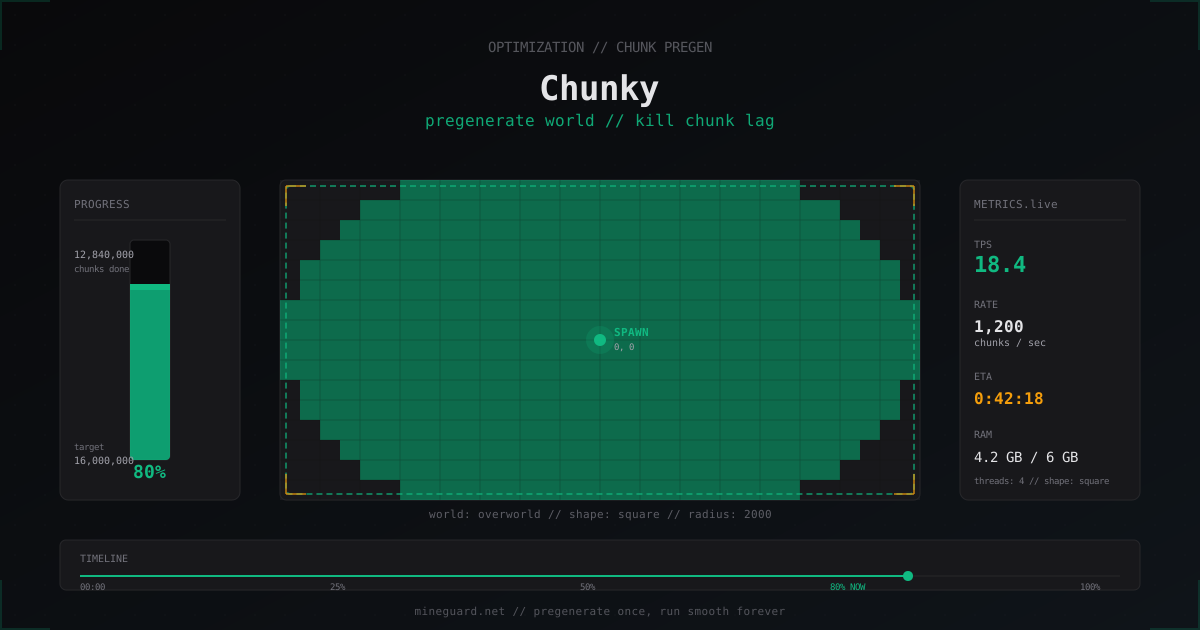
Chunky: Pregenerate Minecraft Chunks and Kill Generation Lag
The Chunky plugin generates chunks ahead of time so the server only reads finished regions from disk during play. Commands, math and real timings.
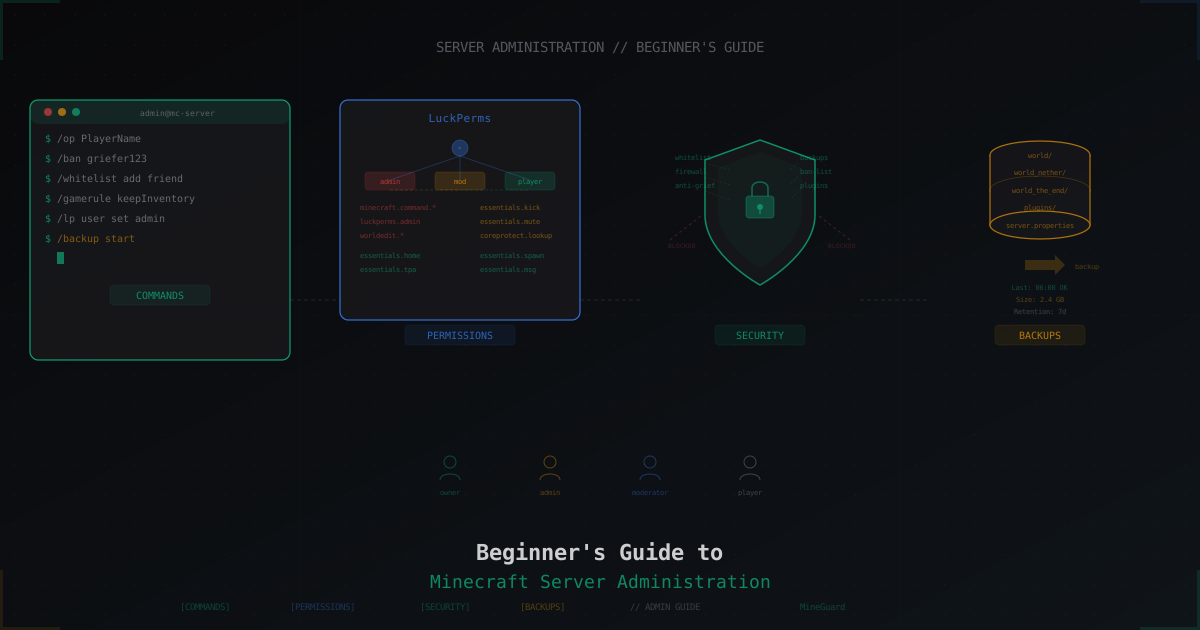
Beginner's Guide to Minecraft Server Administration
Complete guide for new Minecraft server admins: essential commands, LuckPerms permissions, world management, backups, player moderation, whitelist setup, basic security, and common beginner mistakes.

TCP vs UDP Attacks on Minecraft Servers: Breaking Down the Differences
Minecraft Java runs on TCP, Bedrock on UDP. Attacks on these protocols differ fundamentally: SYN floods vs amplification, stateful filtering vs DPI. We break down each attack type, real traffic volumes, and defense strategies.